Recovery Blocks by Meeting Type: Proven 2025 Guide [Expert]
Learn Recovery Blocks by Meeting Type: How to Schedule Short Recovery Windows After High-Cognitive, Social, and Tactical Meetings —Read the expert analysis
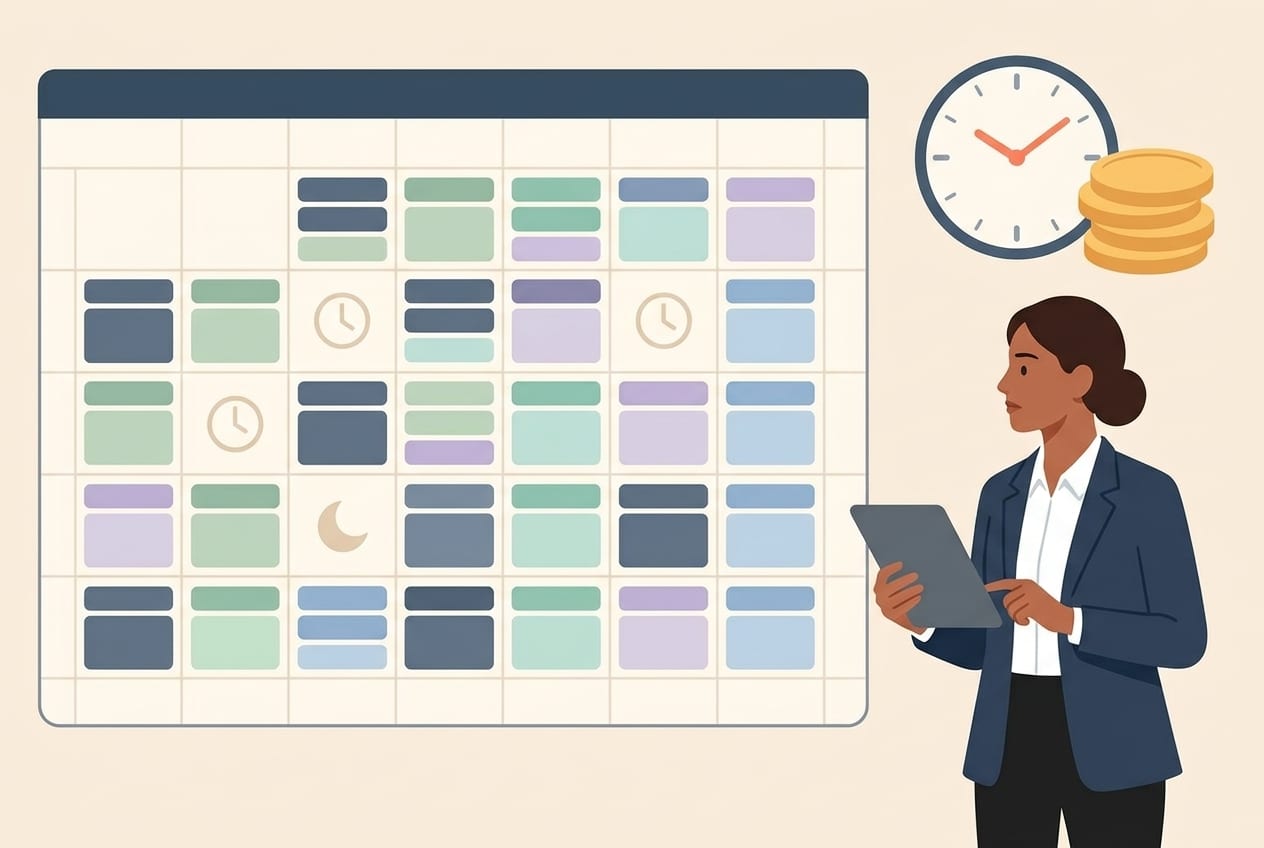
![Recovery Blocks by Meeting Type: Proven 2025 Guide [Expert]](https://nuxxt0us9k7umi1n.public.blob.vercel-storage.com/blog-covers/69fc9fcc2e75ceede2e4b60e_article-11a0b825-3e48-4e76-a3ae-b9e81fee9ec9.jpeg)
Scheduling short, intentional recovery blocks after meetings reduces cognitive fatigue and improves decision quality: aim for 5–20 minutes after high‑cognitive meetings, 10–30 minutes after socially intensive meetings, and 5–15 minutes after tactical, decision-heavy sessions. Studies show brief breaks can restore focus and reduce errors—micro‑breaks of 5–15 minutes improve sustained attention by up to 30% in the short term [1].
Introduction
Business professionals increasingly face dense meeting calendars. To maintain productivity and wellbeing, leaders and individual contributors need a practical approach to schedule short recovery windows—what we call "recovery blocks"—tailored to meeting type. This article provides evidence-based guidance, reusable scheduling templates, and implementation steps to integrate recovery blocks into daily workflows.
Why schedule recovery blocks after meetings?
Recovery blocks are short, deliberate pauses immediately following meetings to allow cognitive, emotional, and physiological reset. They reduce decision fatigue, improve attention, and preserve interpersonal resilience after emotionally taxing interactions. Rather than viewing breaks as optional, treating them as structured components of the workday improves overall meeting ROI.
What is cognitive fatigue?
Cognitive fatigue is the measurable decline in mental performance and self‑regulation that follows sustained attention or complex problem solving. It manifests as slower reaction time, reduced working memory capacity, and impaired decision quality. Recovery blocks counteract these effects by enabling short rest, reflection, and low‑effort tasks that restore attentional resources.
How do social and tactical meetings differ?
Meetings vary by the primary demand they place on participants:
- High‑cognitive: deep problem solving, analysis, brainstorming.
- Social/emotional: conflict, feedback, coaching, stakeholder management.
- Tactical/decision‑heavy: status updates with rapid decisions, prioritization, resource allocation.
Each type produces different recovery needs. Social meetings may require emotional processing; cognitive sessions need mental rest; tactical meetings often demand short tactical recovery to reorient to tasks.
Quick Answers
Quick Answer 1: After high‑cognitive meetings schedule a 10–20 minute recovery block for reflection and low‑effort tasks.
Quick Answer 2: After social or emotionally intensive meetings schedule 15–30 minutes for decompression and boundary setting.
Quick Answer 3: After tactical meetings schedule 5–15 minutes to log decisions and clear short‑term action items.
How long should recovery blocks be by meeting type?
Use these length ranges as a baseline and adjust based on meeting intensity, individual differences, and calendar constraints.
High‑cognitive meetings
Recommended: 10–20 minutes.
- Purpose: Restore working memory and analytical capacity.
- Activities: 5 minutes of silence or light movement (stand, stretch), 5–10 minutes of task triage or quick notes, optional 5 minutes for a short walk or hydration.
- Why: Research on micro‑breaks shows brief rests improve performance on complex tasks and reduce perceived effort [2].
Social / emotionally intensive meetings
Recommended: 15–30 minutes.
- Purpose: Process emotions, reestablish professional boundaries, and recover social energy.
- Activities: 5–10 minutes of reflection or journaling, 5–10 minutes of breathing or a short walk, 5–10 minutes for a short buffer before the next meeting to reset tone.
- Why: Emotional contagion and social strain deplete resources differently from cognitive effort; longer recovery helps reduce interpersonal burnout.
Tactical / decision‑heavy meetings
Recommended: 5–15 minutes.
- Purpose: Consolidate decisions, assign actions, and prevent carryover errors.
- Activities: 3–7 minutes to log decisions and owners, 2–5 minutes to scan immediate inbox or calendar for conflicts, optional 2–3 minutes for a brief stretch.
- Why: Tactical meetings often require quick cognitive transitions; short recovery prevents errors due to lingering cognitive load.
Practical scheduling templates
Below are reproducible calendar patterns you can copy into individual or team calendars. Use boxed time or "focus" events that block the slot so calendar tools respect the recovery block.
Single meeting day template
- Morning deep work block: 90 minutes.
- High‑cognitive meeting: 60 minutes.
- Recovery block (post‑meeting): 15 minutes (10–20 for high‑cognitive).
- Short task block: 45–60 minutes.
- Lunch and extended recovery: 45–60 minutes.
Tip: Mark recovery blocks as "Busy" and label them "Recovery: Do not schedule."
Back‑to‑back meetings day template
- Limit consecutive meetings to 2 before a 15–30 minute recovery (mix types so social meetings get longer recovery).
- After two tactical meetings: 10 minutes recovery.
- After a social + tactical combo: 20 minutes recovery.
- Reserve a mid‑afternoon 30–45 minute recovery/quiet period for reconsolidation and priority setting.
Sign up for our newsletter
Get the latest updates, product launches, and helpful tips delivered straight to your inbox.
Implementation steps for teams and leaders
Adopting recovery blocks requires policy, training, and calendar hygiene. Use lightweight rules and model behavior at the leadership level.
Policy design and calendar cues
- Define baseline recovery durations by meeting type and publish them in a team guide.
- Add recovery blocks automatically to meeting invites (host can append a 10/15 minute block).
- Enable calendar rules: require 5–10 minute gaps for internal meetings and 15–30 minutes for HR, feedback, or client meetings.
Individual strategies
- Use a template response for invites that requests recovery time when necessary.
- Adopt a 2‑minute wrap‑up practice: summarise decisions and next steps before the recovery block begins.
- Practice rapid cognitive resets: deep breaths, a quick walk, or low‑cognitive tasks to fill the recovery window.
Measuring and iterating
Track simple metrics to evaluate impact and refine timing.
- Collect qualitative feedback: ask team members how often they feel drained and how helpful recovery blocks are.
- Measure meeting quality: percentage of meetings with clear decisions, number of follow‑ups required.
- Time tracking: average time before resuming productive work after different meeting types.
- Refine: increase recovery after meetings flagged as high‑intensity; shorten when recovery is underused.
Contextual background: science behind recovery blocks
Two bodies of research guide recovery block design:
- Cognitive load and attention restoration: Micro‑breaks restore performance in sustained attention tasks and reduce subjective mental fatigue [2].
- Social and emotional recovery: Work on emotional labor shows that decompression and boundary management reduce burnout and improve long‑term engagement [3].
Practical application of these findings suggests short, varied recovery activities outperform passive waiting because they actively shift cognitive or emotional states.
Key Takeaways
- Use meeting type to determine recovery length: 10–20 minutes (high‑cognitive), 15–30 minutes (social), 5–15 minutes (tactical).
- Schedule recovery blocks explicitly in calendars and label them as "Busy" to prevent overruns.
- Combine short restorative activities—movement, journaling, task triage—to maximize restoration in brief windows.
- Leaders should model recovery behavior and standardize recovery expectations in team policies.
- Measure impact with simple metrics and adjust durations based on feedback and meeting intensity.
Frequently Asked Questions
How do I categorize meetings quickly to decide recovery length?
Assign meetings to one of three buckets by asking: Is the meeting primarily analytical (high‑cognitive), emotionally charged (social), or focused on rapid decisions (tactical)? Use the meeting subject line or agenda to label invites (e.g., "Brainstorm (Cognitive)" or "One‑on‑One (Social)").
What if my calendar is fully booked and I can’t add recovery blocks?
Start small: add 5‑minute recovery slots after high‑value meetings. Negotiate with frequent collaborators to adopt minimal gaps and protect one or two daily recovery periods. Over time, the efficiency gains will justify restructuring.
How do recovery blocks affect team responsiveness and meetings with external clients?
Communicate expectations proactively: for client meetings, clarify that a brief pause after the call allows for prompt, accurate follow‑up. Short recovery blocks often improve responsiveness by reducing errors and clarifying next steps before responding.
Are recovery blocks necessary for all employees?
Yes, but durations vary. Individual differences (chronotype, role, workload) influence optimal timing. Offer guidelines rather than rigid rules and let employees personalize recovery activities within defined ranges.
What activities are best during a recovery block?
Effective activities are brief, low‑cognitive, and restorative: standing and stretching, a short walk, hydration, journaling one sentence about takeaways, or a 2–5 minute breathing exercise. Avoid jumping directly into another demanding task.
How can leaders model recovery behavior without appearing to avoid work?
Leaders can model recovery by transparently scheduling recovery blocks and briefly explaining their purpose (e.g., "I'll take 10 minutes to capture decisions and reset"). Normalizing recovery as a productivity tool reframes it away from avoidance toward discipline.
Sources
[1] Studies on micro‑breaks and attention restoration; see meta‑analyses on brief breaks and sustained attention performance. [2] Research on cognitive fatigue and decision making. [3] Literature on emotional labor and recovery strategies. For practical summaries, consult organizational psychology and meeting effectiveness research (e.g., Harvard Business Review) and clinical summaries on stress recovery.
Sign up for our newsletter
Get the latest updates, product launches, and helpful tips delivered straight to your inbox.
Scheduler
Hand your calendar to an assistant that never drops a thread.
Keep reading
Where Do All Your Meetings Actually Go? The Real Cost, By the Numbers
Reclaim.ai surveyed 1,300+ professionals on how much time meetings eat, what they cost, and how often they fall apart before they even happen. The numbers are more specific than the usual complaint.
![Three-Question Compact Agendas: Proven System [Pro]](https://nuxxt0us9k7umi1n.public.blob.vercel-storage.com/blog-covers/6a0e45ff6996f1fff37fb29f_article-27586b25-d86a-4410-9f05-1e27213c92c4.jpeg)
Three-Question Compact Agendas: Proven System [Pro]
Eliminate delays with Three-Question Compact Agendas: Schedule short internal syncs that start on time and end with decisions. Read the analysis now
![Subset-Critical Windows: Proven Scheduling [Expert Guide]](https://nuxxt0us9k7umi1n.public.blob.vercel-storage.com/blog-covers/6a0e4602d4e4fcd05af4bfe9_article-2cf1d83b-25fb-41d7-b3ca-af2248d7d1b7.jpeg)
Subset-Critical Windows: Proven Scheduling [Expert Guide]
Act now: Master Subset-Critical Windows scheduling to speed decisions when only a small, key group must attend a multi-party meeting. Read analysis.