Subset-Critical Windows: Proven Scheduling [Expert Guide]
Act now: Master Subset-Critical Windows scheduling to speed decisions when only a small, key group must attend a multi-party meeting. Read analysis.
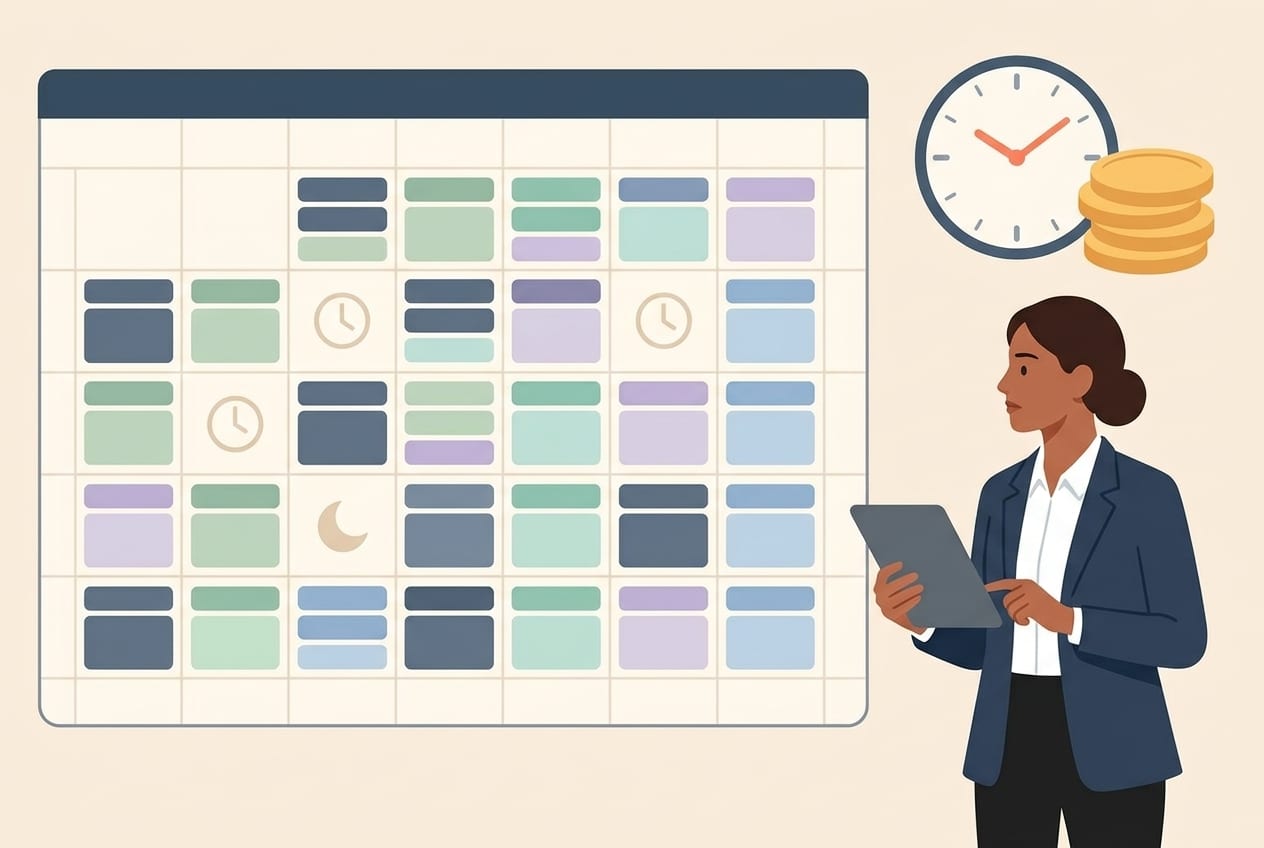
![Subset-Critical Windows: Proven Scheduling [Expert Guide]](https://nuxxt0us9k7umi1n.public.blob.vercel-storage.com/blog-covers/6a0e4602d4e4fcd05af4bfe9_article-2cf1d83b-25fb-41d7-b3ca-af2248d7d1b7.jpeg)
Introduction
When a multi-party meeting includes many potential participants but only a few are essential to the outcome, scheduling becomes a strategic exercise rather than an operational nuisance. This article defines the concept of "subset-critical windows," explains why they matter, and provides practical scheduling strategies tailored for business professionals who must secure attendance from a small, key group while keeping the larger stakeholder list informed or optionally engaged.
What is a Subset-Critical Window?
A subset-critical window is a specific meeting time when only a predetermined small group of attendees (the subset) need to be present to achieve the meeting's primary objective. The broader audience may be optional, briefed asynchronously, or included in a follow-up. Using subset-critical windows reduces scheduling friction and accelerates decision-making without excluding necessary oversight.
Why use subset-critical scheduling?
- Reduces time-to-decision by minimizing coordination overhead.
- Protects key participants' limited availability for high-value work.
- Maintains transparency for nonessential stakeholders through asynchronous updates.
- Improves meeting quality by keeping discussions focused on decision-makers.
Quick Framework: 6-Step Process for Scheduling a Subset-Critical Window
- Define the objective and confirm which roles are required to meet it.
- Assign a meeting owner who has authority to finalize time and scope.
- Collect constrained availability from subset-critical attendees (2-3 preferred slots).
- Propose a primary slot plus an alternate and confirm within 24-48 hours.
- Inform optional participants of the decision and provide an asynchronous briefing package.
- Follow up with minutes and decisions, documenting next steps and who was present.
Identifying the Subset: Roles, Authority, and Impact
Before any scheduling, classify potential attendees into categories based on role, authority, and impact:
- Decision-makers: Individuals whose presence is necessary for signing off, approving budgets, or finalizing scope.
- Subject-matter contributors: May be needed for parts of the meeting but can often join for segments.
- Informational attendees: Should be briefed after the meeting or receive written summaries.
- Observers or optional: Attend only if capacity allows or as pre-approved alternates.
Prioritize scheduling around decision-makers first; include subject-matter contributors only when their input cannot be captured asynchronously.
Practical Scheduling Tactics
1. Use compressed proposal windows
Offer no more than three potential times, concentrated within a short tactical window (e.g., next 72 hours) to reduce endless polling. Constraining choices increases response rates and speeds confirmation.
2. Leverage overlapping calendar views and scheduling tools
Tools like shared calendars, integrated scheduling assistants, or simple overlay views help identify the intersection of availability. If privacy or calendar policies prevent full visibility, ask key participants for 2-3 preferred slots.
3. Set a firm confirmation deadline
Communicate a clear cut-off for confirmations (24–48 hours), and follow up proactively. When the deadline arrives, the meeting owner should make a final call using proxies if needed (see "Designated Alternates" below).
4. Use designated alternates and proxies
When decision-makers are frequently unavailable, pre-approve alternates with delegated authority to attend and decide. Document the delegation in advance to avoid decisions being re-opened later.
5. Modularize the agenda
Create an agenda that separates:
- Core decision items (subset-critical)
- Contributory items (invite-only segments)
- Informational items (distributed as read-ahead)
This modular structure allows the subset to complete decisions efficiently while letting noncritical participants opt out or join selectively.
When to Use Asynchronous Alternatives
Not all meetings require synchronous attendance. Consider asynchronous decision protocols when:
- Decisions are document-driven and do not require real-time debate.
- Time zones or schedules make synchronous gatherings costly.
- Input can be captured via tracked comments, recorded presentations, or digital sign-offs.
Use asynchronous tools for briefings, pre-reads, and to solicit approvals; reserve synchronous subset-critical windows for negotiation or when live dialogue impacts outcomes.
Time Zone and Geographic Considerations
When participants are geographically dispersed, maximize fairness and practicality by rotating subset-critical windows across recurring meetings, or apply an equity rule for ad hoc meetings (e.g., rotate the burden of early/late times). Use time-zone friendly scheduling heuristics:
- Prefer midday windows in the subset where possible.
- If crossing three or more time zones, prioritize asynchronous for non-critical attendees.
- Document timezone references in calendar invites and use UTC or local time with offsets to avoid confusion.
Communication Templates and Scripts
Use concise, consistent language when inviting subset-critical attendees. Example elements to include:
- Purpose and objective (one sentence).
- Required participants and decision authority.
- Proposed primary and alternate times with a confirmation deadline.
- Read-ahead materials and expected preparation time.
Explicitly state that optional attendees will be updated asynchronously and that the subset will make decisions in the meeting.
Sign up for our newsletter
Get the latest updates, product launches, and helpful tips delivered straight to your inbox.
Governance: Decision Rights and Accountability
Clear decision rights prevent rework. Define ahead of the meeting:
- Who can approve, reject, or escalate decisions.
- The authority of alternates and proxies.
- How outcomes will be documented and traced.
Record attendance and decision outcomes in the meeting minutes and tag action owners with deadlines to reduce ambiguity.
Measuring Effectiveness
Track metrics that reflect the efficacy of subset-critical scheduling strategies. Useful KPIs include:
- Time from scheduling to confirmed meeting (hours/days).
- Decision cycle time (from meeting to implemented decision).
- Percentage of meetings requiring re-scheduling due to absent decision-makers.
- Stakeholder satisfaction with communication and outcomes (surveyed quarterly).
Benchmark improvements after implementing subset-critical practices: organizations often see fewer scheduling cycles and faster approvals (internal benchmarks and studies in organizational behavior corroborate similar trends) (Harvard Business Review; Microsoft Work Trend Index).
Contextual Background: Organizational Culture and Meeting Norms
For subset-critical scheduling to work, organizations must support norms that prioritize efficient decision-making over exhaustive attendance. This includes:
- Documented meeting policies that recognize subset-critical authority.
- Training for meeting owners on agenda design and time management.
- Executive sponsorship to enforce delegation standards and alternates.
Without cultural alignment, subset-critical scheduling risks being perceived as exclusionary or causing friction when stakeholders feel uninvolved.
Tools and Technology Recommendations
Recommended tool categories and examples:
- Calendar overlays & scheduling assistants (e.g., built-in calendar overlay features; automated schedulers).
- Polling tools for quick slot selection (with constrained options).
- Asynchronous collaboration platforms for read-aheads and approvals (document collaboration, e-signatures).
- Recording and transcription tools to capture skipped attendees' briefings.
Choose tools that integrate with existing enterprise calendars to reduce friction and privacy issues.
Implementation Roadmap
- Pilot the subset-critical scheduling process on a subset of teams or project types.
- Collect metrics for 6–8 weeks: scheduling time, decision time, and stakeholder feedback.
- Refine templates, delegation rules, and tools based on pilot results.
- Scale to broader units with training and documented policies.
Key Takeaways
- Identify the small, essential group (subset) needed to make decisions and prioritize their availability.
- Use constrained proposal windows, a clear confirmation deadline, and a decisive meeting owner.
- Offer asynchronous briefings and modular agendas so optional attendees remain informed without blocking decisions.
- Pre-approve alternates and document delegation to prevent rework.
- Track scheduling and decision metrics to quantify improvements and refine processes.
Frequently Asked Questions
How do I determine who belongs in the subset-critical group?
Start by mapping the meeting objective to required decision rights. Ask: who must sign, approve, or provide information that cannot be captured otherwise? Prioritize those individuals. Validate choices with the meeting owner and the broader stakeholder list to reduce surprises.
What if the subset-critical members have no common availability?
Options include: assign an alternate with pre-authorized decision power, negotiate micro-sessions (short 15–30 minute calls focused on specific items), or convert items to asynchronous approvals. If none are feasible, escalate scheduling authority to a higher decision owner to mandate a time.
How should I handle stakeholders who feel excluded?
Communicate transparently: explain why only the subset is required, provide read-ahead materials, and offer a summary or recording after the meeting. Invite optional stakeholders to provide input before the meeting if their perspectives are relevant.
Are there legal or compliance considerations when excluding attendees?
Yes. For regulated decisions (e.g., finance, legal, safety), ensure mandated oversight is present or represented by a delegated alternate. Document delegations in writing and include compliance reviewers in read-ahead or post-meeting reports as required.
How can technology speed up confirming a subset-critical window?
Use calendar integration, scheduling assistants, and limited-option polling tools to show real availability and solicit quick confirmations. Automated reminders and a short confirmation deadline can reduce delays significantly.
When is asynchronous decision-making preferable to a subset-critical window?
Asynchronous is preferable when decisions are document-based, time zones are prohibitive, or the meeting's value-add is low relative to coordination costs. Use asynchronous workflows if the meeting does not require live negotiation or immediate back-and-forth deliberation.
How do we measure success after implementing subset-critical scheduling?
Measure reductions in scheduling cycles, decreased time-to-decision, and stakeholder satisfaction. Track rework due to missing decision-makers and use surveys to assess perceptions of inclusion and transparency. Adjust governance if metrics show increased friction.
Sources: Harvard Business Review on meeting management practices; Microsoft Work Trend Index; internal organizational productivity analyses.
Sign up for our newsletter
Get the latest updates, product launches, and helpful tips delivered straight to your inbox.
Scheduler
Hand your calendar to an assistant that never drops a thread.
Keep reading
Where Do All Your Meetings Actually Go? The Real Cost, By the Numbers
Reclaim.ai surveyed 1,300+ professionals on how much time meetings eat, what they cost, and how often they fall apart before they even happen. The numbers are more specific than the usual complaint.
![Three-Question Compact Agendas: Proven System [Pro]](https://nuxxt0us9k7umi1n.public.blob.vercel-storage.com/blog-covers/6a0e45ff6996f1fff37fb29f_article-27586b25-d86a-4410-9f05-1e27213c92c4.jpeg)
Three-Question Compact Agendas: Proven System [Pro]
Eliminate delays with Three-Question Compact Agendas: Schedule short internal syncs that start on time and end with decisions. Read the analysis now
![Scheduling When Contingent or Hourly: Proven Guide [2025]](https://nuxxt0us9k7umi1n.public.blob.vercel-storage.com/blog-covers/6a0345c6b2738402f73788d0_article-dc4c15e1-0b70-4a75-beef-43956a5d11ad.jpeg)
Scheduling When Contingent or Hourly: Proven Guide [2025]
Learn Scheduling When Participants Are Contingent or Hourly: Best Practices for Teams Without Full Calendar Access - Cut no-shows 30-50% Get full breakdown