Automating Multilingual and Cross-Cultural Scheduling
Automating multilingual and cross-cultural scheduling reduces friction and raises meeting acceptance. Discover AI that adapts language, etiquette & time norms.
Introduction
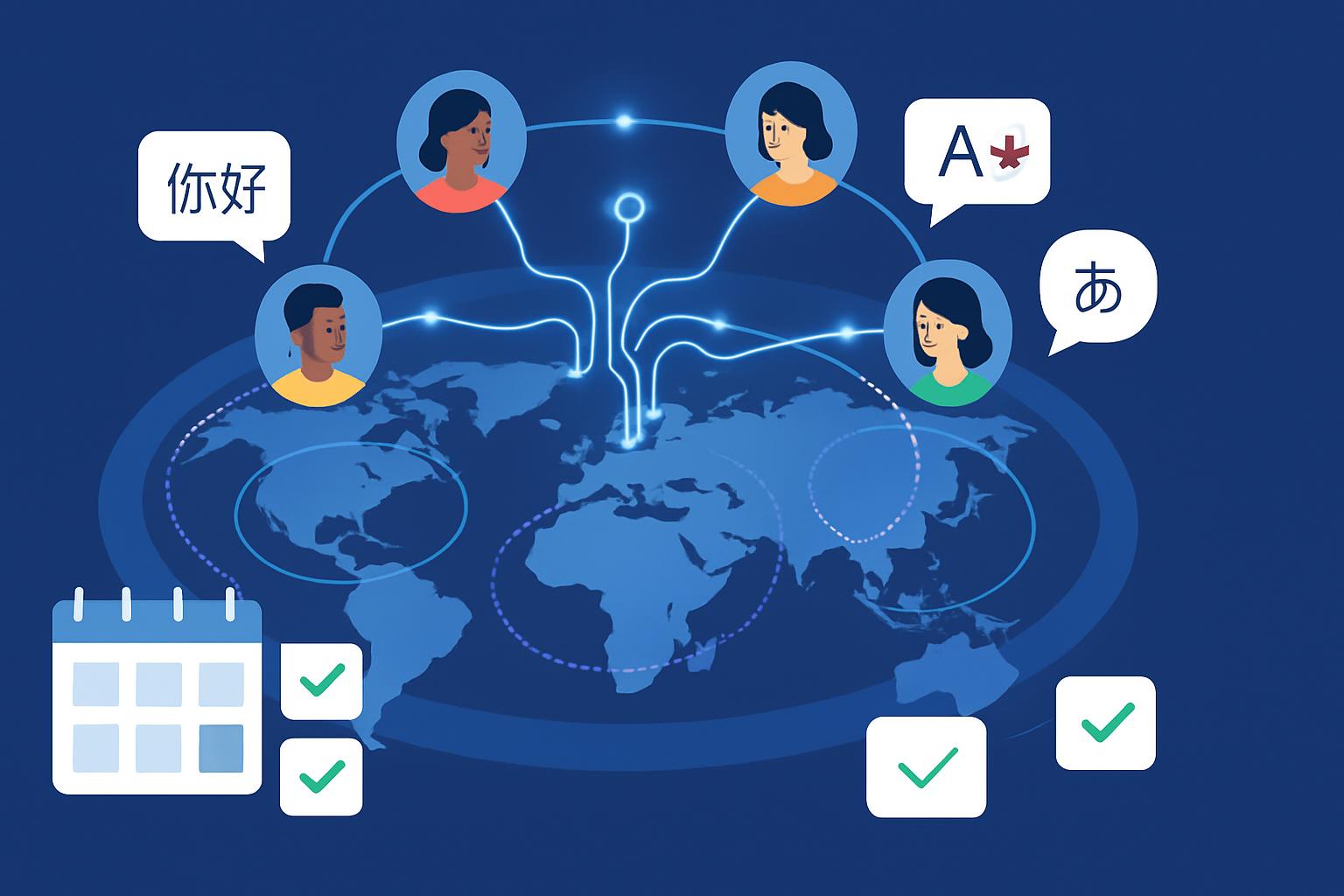
Global teams and customers expect scheduling systems that understand not only time zones, but also language, etiquette, and local work norms. Generative AI (GenAI) introduces new capabilities to automate complex, contextual decisions that previously required manual human intervention. This article explains how businesses can deploy GenAI to handle multilingual and cross-cultural scheduling reliably, ethically, and at scale.
Why automate multilingual and cross-cultural scheduling?
Scheduling across languages and cultures involves more than selecting an available slot. It requires context-aware language translation, appropriate tone and formality, respect for local holidays and working hours, and time normalization across daylight saving rules. Automating these aspects improves efficiency and the quality of cross-border collaboration.
Key challenges addressed
Generative AI helps solve multiple recurring problems:
- Language misunderstandings and translation delays
- Inappropriate tone or formality in invitations and confirmations
- Conflicts caused by mis-handled time zones or daylight saving time
- Non-compliance with regional privacy or scheduling norms
Business benefits
Automation yields measurable outcomes for organizations:
- Faster scheduling: fewer manual emails and less administrative overhead
- Higher acceptance rates due to culturally appropriate phrasing
- Reduced no-shows via timezone-aware reminders and localized timing
- Improved customer experience by meeting expectations for local communication styles
How generative AI handles language
Generative models have matured to perform context-sensitive language tasks that are essential for scheduling automation.
Natural language understanding and translation
Core capabilities include:
- Automatic detection of preferred language from calendar entries, email headers, or user profile metadata.
- High-quality translation of meeting invitations, descriptions, and follow-ups while preserving intent and meaning (mirroring advances in neural machine translation).
- Generation of localized subject lines and meeting summaries optimized for clarity in the recipient's language.
(Source: neural translation and industry benchmarks, 2023–2024)
Tone, formality, and etiquette adaptation
Generative AI can tailor communication style to cultural expectations by adjusting:
- Formality level (e.g., first-name vs. last-name address)
- Greeting and closing conventions
- Indirect vs. direct phrasing based on regional preferences
Best practice: maintain user-configurable style profiles and allow overrides for individual contacts or contexts.
Handling local time norms and calendars
Time management is one of the most error-prone aspects of cross-border scheduling. GenAI can reduce errors through robust normalization and culturally aware defaulting.
Time zone normalization and daylight saving
Key considerations:
- Always use canonical time zone identifiers (IANA tz database names) for backend storage to avoid ambiguous offsets.
- Detect participant locations from calendar metadata, email headers, or explicit user settings, and present times in each participant’s local time.
- Account automatically for daylight saving transitions when proposing recurring meetings or appointments that span DST changes.
(Source: IANA Time Zone Database practices)
Cultural scheduling norms and working hours
Generative AI can incorporate cultural and regional norms into proposed scheduling windows:
- Default working hours that respect regional norms (e.g., siesta regions, compressed workweeks)
- Local public holidays and observances to avoid proposing inconvenient times
- Preferred meeting lengths and start times based on local meeting etiquette
Systems should allow enterprise policy overrides to align automatically with company expectations and SLAs.
System architecture and integration patterns
Integrating generative AI into scheduling workflows requires careful system design to balance flexibility, latency, and compliance.
Core components
- Input layer: collects context from calendars, contact records, user preferences, locale, and previous communication patterns.
- Pre-processing: canonicalizes time zones, normalizes names and titles, and extracts language and formality signals.
- Generative engine: creates localized messages, subject lines, reminders, and alternative time proposals while conforming to templates and guardrails.
- Decision service: applies business rules and user policies to accept, modify, or reject AI proposals.
- Delivery and synchronization: interacts with calendar APIs, email, and messaging platforms to send invites, confirmations, and reminders.
Data and privacy considerations
Privacy and security are critical for scheduling systems that process personal data across jurisdictions:
- Minimize data sent to third-party AI services; prefer on-premise or enterprise cloud models where possible.
- Use pseudonymization and strict access controls for calendar and contact data.
- Comply with regional laws (e.g., GDPR, CCPA) and maintain audit trails for AI-driven decisions.
Implement consent screens for automatic language detection and cultural adaptation features to maintain transparency.
Implementation best practices
Successful implementations combine technical rigor with human-in-the-loop oversight.
Training data and fine-tuning
Recommendations for model tuning:
- Fine-tune models on enterprise-specific communication examples, anonymized where necessary.
- Augment datasets with locale-specific phrases and etiquette examples to reduce inappropriate or misleading outputs.
- Regularly evaluate generation quality with native speakers and cultural experts.
User experience and consent
Design UX flows that build trust and reduce friction:
- Show users proposed localized messages and time suggestions before sending.
- Allow simple toggles to adjust formality, language, and time preference settings per contact or region.
- Offer a rehearsal or preview mode that demonstrates how invites will appear to other recipients.
Measurable outcomes and KPIs
Track concrete metrics to evaluate the impact of GenAI scheduling automation.
Metrics to track
- Scheduling time reduction: average time from invite to confirmed meeting
- Acceptance rate: percent of invites accepted on first proposal
- No-show reduction: change in participant attendance after localized reminders
- User satisfaction: NPS or satisfaction scores for scheduling interactions
- Error rate: instances of time-zone related conflicts or incorrect language usage
Quick Answers
Contextual background: Language, etiquette, time norms
This section provides background context for non-technical stakeholders on why nuanced handling is necessary.
Linguistic nuance and localization
Localization goes beyond translation: it includes idiom, register, cultural references, and local conventions for dates and times. For scheduling, this might mean using 24-hour time in some countries, or phrasing times relative to local business hours.
Etiquette and cultural signals
Different cultures have distinct meeting norms. For example, some cultures emphasize hierarchical titles in invitations, others prioritize brevity. Misreading these cues can lead to offense or reduced engagement. AI can be trained to infer and apply these preferences but must be validated by cultural experts.
Legal and compliance context
Local regulations influence how contact and scheduling data can be used. Examples include restrictions on automated profiling and rules for consent when processing personal data. Enterprises should map regulatory requirements to their AI workflows.
Deployment scenarios and use cases
Generative AI-driven scheduling fits multiple enterprise scenarios.
Enterprise calendaring
Internal tools that coordinate meetings among globally distributed teams can use AI to suggest slots minimizing out-of-hours impact, automatically translate meeting agendas, and create minute-level reminders adjusted to local times.
Customer-facing scheduling
Customer appointments, sales demos, and support calls benefit from AI that uses the customer's preferred language, avoids local holidays, and aligns meeting times with the customer's typical business hours, improving conversion and retention.
Key Takeaways
- Generative AI can eliminate much of the manual effort involved in multilingual and cross-cultural scheduling by detecting language, adapting tone, and normalizing time zones.
- Design systems with privacy, human oversight, and cultural validation to avoid errors and preserve trust.
- Measure impact using specific KPIs such as scheduling speed, acceptance rate, and no-show reduction.
- Use canonical time zone identifiers, DST-aware logic, and locale-specific templates for reliable automation.
Frequently Asked Questions
How does generative AI detect the correct language for a recipient?
Generative systems infer language from multiple signals: user profile preferences, calendar locale, email headers, past communication history, and explicit user settings. When confidence is low, the system should prompt the sender to confirm the language.
Can AI reliably adjust tone and formality for different cultures?
Yes, when models are fine-tuned with high-quality, locale-specific examples and validated by native speakers. However, systems should allow manual overrides and provide transparency about adjustments to avoid misunderstandings.
How are time zone and daylight saving time handled automatically?
Use the IANA time zone database for canonical storage and conversion. Proposals should be calculated with DST-aware libraries and displayed in recipients' local times. For recurring events, systems must recompute local times when DST transitions occur to avoid accidental shifts.
What privacy and compliance risks should organizations consider?
Risks include sharing personal calendar data with third-party models, automated profiling limitations under regional regulations, and insufficient consent. Mitigations include data minimization, on-premise or enterprise-hosted models, clear consent flows, and audit logging.
Is human oversight necessary for AI-driven scheduling?
Yes. Human-in-the-loop review reduces risk and increases acceptance. Provide previews of AI-generated messages and allow users to approve or edit content before sending.
How do I measure the success of a GenAI scheduling deployment?
Track metrics such as time to schedule, invite acceptance rate, no-shows, user satisfaction, and error rates related to translation or timezone mistakes. Use A/B testing when rolling out features to quantify improvements.
What are common pitfalls during implementation?
Common pitfalls include relying on default model outputs without localization review, ignoring regulatory constraints, poor handling of ambiguous time zone data, and failing to provide user controls for tone and language preferences. Address these with rigorous testing, policy alignment, and configurable UX defaults.
(Sources: IANA Time Zone Database guidelines; industry reports on scheduling automation; enterprise AI governance frameworks, 2022–2024)
Scheduler
Hand your calendar to an assistant that never drops a thread.
Keep reading

Where Do All Your Meetings Actually Go? The Real Cost, By the Numbers
Reclaim.ai surveyed 1,300+ professionals on how much time meetings eat, what they cost, and how often they fall apart before they even happen. The numbers are more specific than the usual complaint.
![Three-Question Compact Agendas: Proven System [Pro]](https://nuxxt0us9k7umi1n.public.blob.vercel-storage.com/blog-covers/6a0e45ff6996f1fff37fb29f_article-27586b25-d86a-4410-9f05-1e27213c92c4.jpeg)
Three-Question Compact Agendas: Proven System [Pro]
Eliminate delays with Three-Question Compact Agendas: Schedule short internal syncs that start on time and end with decisions. Read the analysis now
![Subset-Critical Windows: Proven Scheduling [Expert Guide]](https://nuxxt0us9k7umi1n.public.blob.vercel-storage.com/blog-covers/6a0e4602d4e4fcd05af4bfe9_article-2cf1d83b-25fb-41d7-b3ca-af2248d7d1b7.jpeg)
Subset-Critical Windows: Proven Scheduling [Expert Guide]
Act now: Master Subset-Critical Windows scheduling to speed decisions when only a small, key group must attend a multi-party meeting. Read analysis.