Best Practices for Transcribing Investor and Pitch Calls: To
Learn about Transcription Dos & Don'ts for Investor and Pitch Calls: Preserving Tone, Accuracy, and Verbatim Risks in this comprehensive SEO guide.
Introduction
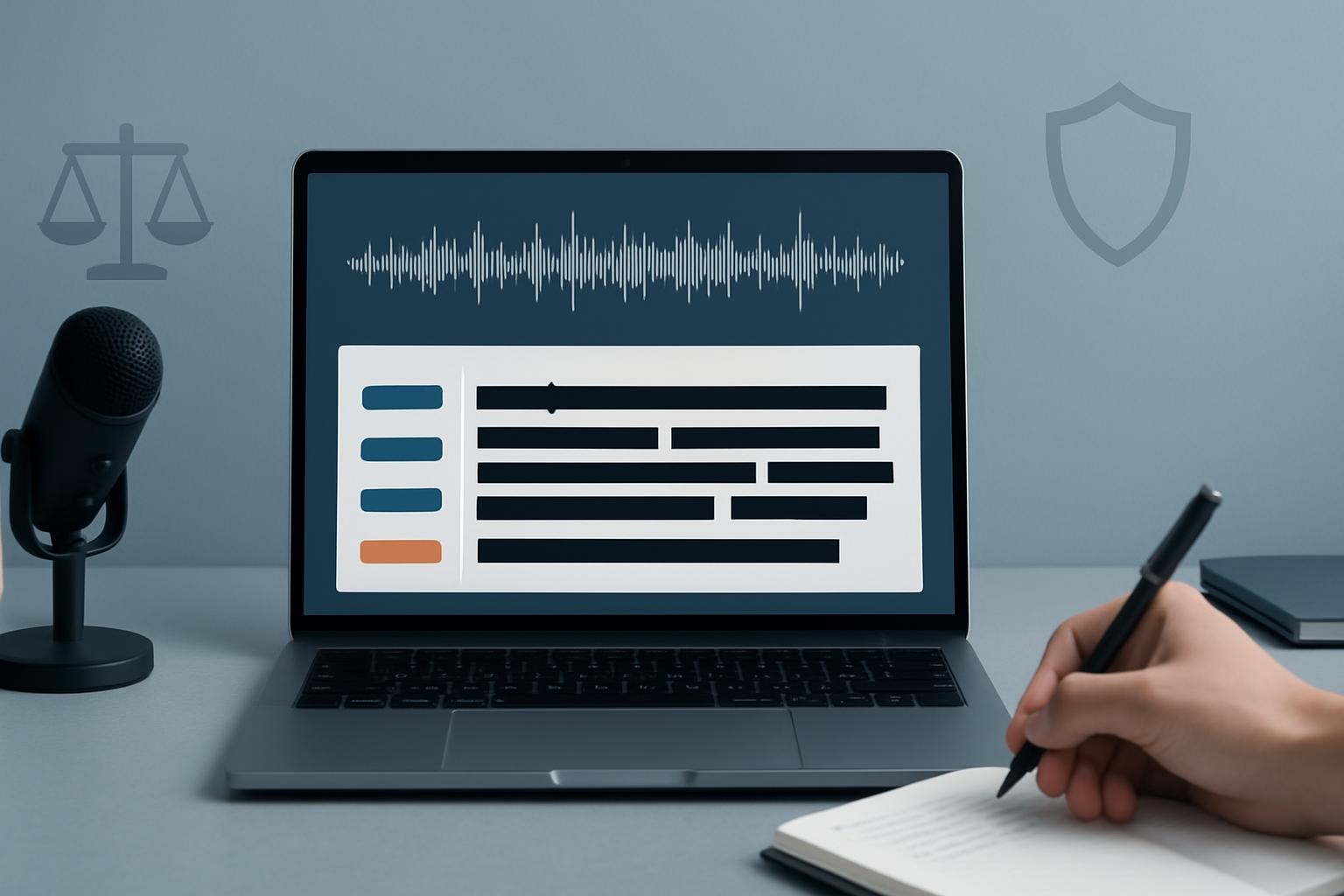
Investor and pitch calls are high-stakes communications where nuance, tone, and precise wording matter. Transcriptions serve many purposes—recordkeeping, compliance, follow-up, and investor relations—but poorly handled transcripts can misrepresent intent, expose confidential information, and create legal risk. This article provides a practical, executive-level guide to transcription dos and don'ts for investor and pitch calls, emphasizing how to preserve tone and accuracy while managing the risks of verbatim capture.
Quick Answer: Prioritize preparation, speaker identification, context preservation, and a human review layer. Avoid unconditional verbatim publication—use redaction, summarized alternatives, and clear consent practices to balance transparency with risk management.
Why transcription quality matters for investor and pitch calls
Transcripts are often treated as canonical records. Investors, legal teams, regulators, and media may rely on them. Errors or decontextualized verbatim quotes can change perceptions, impact valuations, and create compliance exposure.
- Reputational impact: Misquoted tone or omitted hedging words ("I think," "possibly") can alter perceived confidence.
- Legal exposure: Inaccurate transcripts can be used as evidence in disputes or regulatory reviews.
- Operational value: High-quality transcripts improve follow-up actions, diligence, and investor communications.
(Source: industry best practices and compliance guidance.)
Quick Answer: Core Principles
- Prepare the call and consent; 2) Use accurate speaker attribution; 3) Preserve hedging and tone markers; 4) Apply human review and redaction; 5) Do not publish raw verbatim without oversight.
Contextual background: What makes investor calls different?
Investor and pitch calls differ from general meetings because they combine persuasive narrative, financial details, and legally sensitive statements. They often include:
- Forward-looking statements and projections.
- Non-public financial or strategic information.
- Negotiation language and conditional phrasing.
- Multiple stakeholders with varying privileges (founders, CFO, counsel).
These elements raise the bar for transcription fidelity and editorial control.
Transcription Dos (practical steps and best practices)
Follow these steps to maximize accuracy, preserve tone, and protect the organization.
1. Do obtain informed consent and document recording policies
Before the call, invite participants to consent to recording and transcription. Document who will have access to the transcript and the intended uses. Clear consent reduces legal ambiguity and aligns expectations.
2. Do prepare a pre-call checklist
Checklist items include:
- Confirm recording permission and privacy expectations.
- Define which parts of the call are off-the-record, if any.
- Assign a notetaker or reviewer.
- Set audio quality standards (use headsets, quiet rooms).
3. Do use speaker identification and role tags
Label speakers and roles (e.g., CEO, CFO, Lead Investor) in the transcript. This preserves accountability and context. Where possible, insert short role descriptors for non-standard phrases (e.g., [laughs], [aside]).
4. Do preserve hedging and discourse markers
Include hedging words ("I think," "it seems," "possibly") and qualifiers; they are essential to tone and legal intent. Transcribing these accurately preserves nuance and reduces misinterpretation.
5. Do use a hybrid human + AI workflow
Automated transcription provides speed; human reviewers fix speaker errors, jargon, and context. Recommended workflow:
- AI timestamped draft.
- Human pass for speaker attribution and terminology.
- Legal/comms review for sensitive excerpts.
6. Do flag and annotate ambiguous statements
When audio or intent is unclear, flag the segment: annotate with notes like "[unclear: inaudible phrase]" or "[context needed]." This prevents false precision.
7. Do maintain secure storage and access controls
Restrict transcript access using role-based permissions. Log access and export events. For highly sensitive calls, consider encryption at rest and in transit and separate storage for raw audio and redacted transcripts.
8. Do implement a redaction and summary policy
Decide which parts of a verbatim transcript may be redacted and which should be summarized. Example policy items:
- Redact or summarize non-public financial figures when distributing widely.
- Summarize off-the-record conversations; retain verbatim in a secured archive if necessary.
Transcription Don'ts (common mistakes to avoid)
Avoid these pitfalls that frequently lead to miscommunication or legal risk.
1. Don't publish unvetted verbatim transcripts
Raw verbatim transcripts can contain incomplete sentences, filler, and misattributions. Publishing without review risks spreading errors and misrepresentations.
2. Don't omit hedging language
Removing hedges ("maybe," "I think") artificially hardens statements and misstates the speaker’s intent. That can create inaccurate expectations or legal exposure.
3. Don't conflate tone with fact
Tonal cues (sarcasm, irony) are difficult to convey in text. Avoid interpreting tone as fact in the transcript; instead annotate uncertain tonal elements and allow human reviewers to decide on qualifiers.
4. Don't rely solely on AI for final distribution
AI transcription accuracy varies with accents, jargon, and audio quality. Human review mitigates these limitations and catches critical omissions.
5. Don't ignore compliance and retention requirements
Different jurisdictions and industries have varying data retention and disclosure rules. Ignoring these can expose the organization to fines and enforcement actions.
Preserving tone and context: Techniques and annotations
Preserving tone is not the same as verbatim capture. Use these techniques to reflect nuance reliably.
Use role-based labeling and short annotations
Label speakers with role tags and add brief annotations such as [firm laugh], [emphasized], or [hesitant]. Keep annotations objective and standardized.
Capture hedges, pauses, and emphasis selectively
Include hedges and meaningful pauses that alter meaning. Avoid transcribing every filler word unless it affects interpretation. For emphasis, consider markup policies such as using italics or bracketed notes; maintain consistent rules.
Provide contextual summaries for long digressions
When a speaker digresses into complex background or hypothetical scenarios, add a short summary header (e.g., "[Discussion: Market dynamics and competitor X]") so readers get context before reading verbatim lines.
Verbatim risks: When literal transcription creates problems
Verbatim transcripts can be problematic in several scenarios:
- Regulatory exposure: Literal forward-looking statements can be used against the company in enforcement cases.
- Negotiation leaks: Exact offers, valuations, or timelines may harm bargaining positions.
- Privacy breaches: Personal data or privileged counsel-client exchanges may be embedded in transcripts.
Mitigation strategies include redaction, summary alternatives, and restricted access.
When to prefer summaries over verbatim transcriptions
Prefer summaries when content is:
- Highly sensitive (non-public financials).
- Off-the-record or informal commentary not intended for distribution.
- Long technical digressions that add limited value to stakeholders.
Workflow and tools: Practical implementation
Deploy processes and tools that support accuracy, security, and governance.
1. Choose tools with speaker diarization and security features
Prioritize platforms offering speaker diarization, timestamps, secure storage, and audit logs. Ensure vendor contracts include data protection clauses and deletion policies.
2. Define a two-stage review process
- Operational review: Fix speaker labels, correct jargon, and improve timestamps.
- Legal/Communications review: Redact sensitive items, verify forward-looking language, and produce public summaries.
3. Maintain an archive of raw audio and reviewed transcripts
Keep a secure raw-audio archive tied to the reviewed transcript. This allows reconstruction if disputes arise and supports auditability.
4. Automate routine tasks but preserve manual oversight
Use AI to generate drafts, timestamps, and keyword highlights. Automate access controls and retention schedules, but require human sign-off for distribution outside core teams.
5. Train teams on transcription policies
Run periodic training for founders, investor relations, legal, and ops teams. Include scenarios showing the difference between verbatim and summarized outputs and the rationale for redaction.
Compliance, confidentiality, and legal considerations
Legal frameworks often govern recording, data retention, and disclosure. Implement policies that align with corporate counsel and regulatory guidance.
- Obtain legal review for statements that could be construed as guidance or public disclosure.
- Adopt retention schedules consistent with securities and privacy law obligations.
- Be cautious with cross-border data transfers and storage locations.
(Consult corporate counsel for jurisdiction-specific requirements.)
Key Takeaways
- Prepare and document consent: Clarify recording and distribution scope before the call.
- Use hybrid AI + human workflows: AI for speed; humans for nuance and legal risk mitigation.
- Preserve hedging and speaker roles: These preserve tone and legal meaning.
- Avoid publishing raw verbatim without review: Redact and summarize when necessary.
- Secure and govern access: Implement role-based permissions and audit logs.
Frequently Asked Questions
1. How verbatim should a transcript be for an investor call?
Transcripts should be verbatim enough to preserve factual accuracy and hedging language, but not so literal that they replicate every filler or unintelligible utterance. Use human review to decide which filler words or digressions can be omitted without altering meaning.
2. Can I publish full transcripts of investor calls publicly?
Publishing full transcripts is possible but risky. Before public distribution, perform legal and communications review to redact sensitive financial details and confirm forward-looking statements meet disclosure policies. Many companies instead publish summarized versions or selected excerpts.
3. What are the best practices for speaker identification?
Best practices include: collect participant names and roles in advance, use role-based tags in the transcript, and confirm attribution during the call for ambiguous speakers. Speaker diarization tools help but require human validation.
4. How do I balance speed (fast transcripts) with accuracy?
Use AI to produce a rapid draft and prioritize human review for critical sections. Implement a triage: urgent internal needs can rely on draft transcripts with a clear caveat; anything for external distribution should pass full review.
5. When should information be redacted versus summarized?
Redact when the content is legally sensitive, personal, or proprietary. Summarize lengthy informal commentary or contextual background that is useful for understanding but not suitable for verbatim distribution. Keep a secure archive of the original for audit purposes.
6. What governance measures should be in place for transcripts?
Governance measures include: a documented transcription policy, role-based access controls, retention schedules, periodic audits, and mandatory legal review for external distributions. Train staff on these policies regularly.
7. How should companies handle off-the-record comments?
Clarify off-the-record boundaries before the call. If recorded, designate comments as off-the-record in the transcript and exclude them from distributions. Keep a secure internal note of such comments for context, with restricted access and clear annotations.
Sources: Industry best practices, corporate compliance guidance, and communications standards. For legal specifics, consult corporate counsel.
Scheduler
Hand your calendar to an assistant that never drops a thread.
Keep reading

AI Notetakers Are Sitting In on More Meetings Than You Think, Often Without Asking
One in three employed Americans say an AI notetaker has been in their work meetings, and 65% of them say they weren't consistently asked first, according to a July 2026 survey. Here's what that consent gap actually means for teams and legal risk.
![Privacy‑Safe Personal Appointments: Expert Guide [Proven]](https://nuxxt0us9k7umi1n.public.blob.vercel-storage.com/blog-covers/6a4ebc1188d93a9e734f50e2_article-28df6357-c673-43f7-8598-4df42e844f3e.jpeg)
Privacy‑Safe Personal Appointments: Expert Guide [Proven]
Enable Privacy‑Safe Personal Appointments: Let an Assistant Book Health or Family Slots Without Revealing Details —Proven controls. Read expert analysis
Scaling Accurate Speaker Attribution with Hybrid Human + ML
Learn about Speaker Attribution at Scale: Hybrid Human+ML Workflows to Ensure Accurate Transcript Speaker Labels in this comprehensive SEO guide.