Cross-Functional Diligence Orchestration Playbook Guide
Cross-Functional Diligence Orchestration: Scheduling Legal, Finance, and Product Reviews to Eliminate Bottlenecks - Reduce cycles 20-40% with aligned schedules.
Introduction
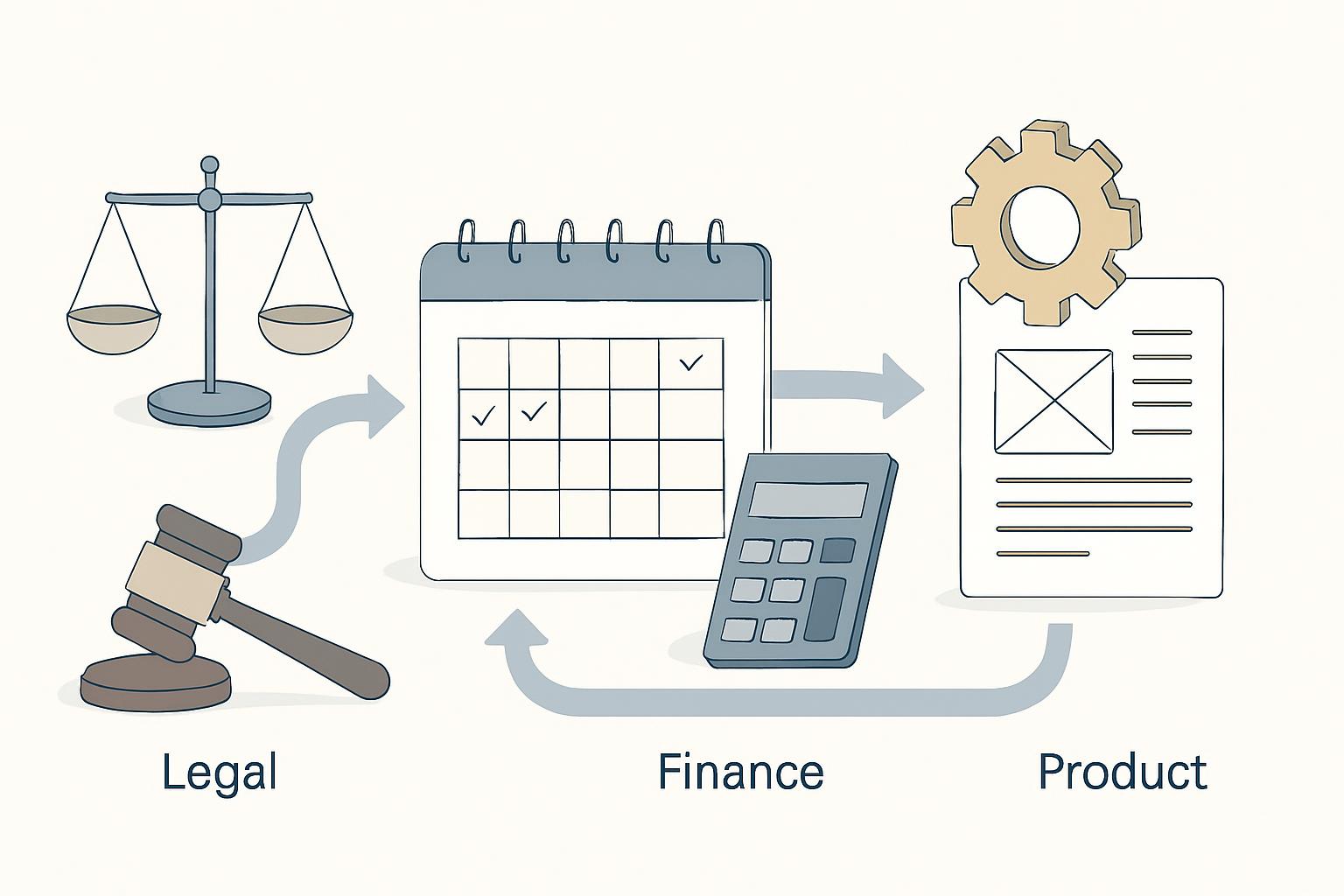
Efficient cross-functional diligence is essential for high-velocity organizations that must move from concept to contract quickly while managing risk. Business professionals increasingly face delays when legal, finance, and product teams operate in silos, use inconsistent inputs, or lack a shared cadence. This article presents a practical, reproducible orchestration framework for scheduling reviews, resolving friction points, and eliminating bottlenecks.
Why Cross-Functional Diligence Orchestration Matters
When teams operate independently, the cost of delay grows exponentially. Legal reviews may wait on complete financial data; finance may wait on product specs; product teams may wait on legal interpretations. The result is idle time, duplicated effort, and missed opportunities.
Business impact and evidence
Key impacts include:
- Increased time-to-market and lost revenue for delayed launches.
- Higher legal and compliance risk when reviews are rushed late in the process.
- Reduced team morale from repetitive reviews and unclear ownership.
Practical evidence from industry shows coordinated processes reduce back-and-forth reviews and improve throughput metrics. For example, standardized review protocols combined with automation shorten cycle times and improve predictability (McKinsey, HBR) [see Sources].
Common Bottlenecks in Legal, Finance, and Product Reviews
Identifying common bottlenecks helps target orchestration interventions. Typical patterns include misaligned priorities, incomplete inputs, unclear SLAs, and sequential handoffs that could run in parallel.
Legal review bottlenecks
Legal delays often stem from late submissions, ambiguous requirements, and lack of templates. Specific causes include:
- No standardized contract templates or playbooks.
- Requests submitted without critical facts or risk tolerances.
- Multiple legal approvers with no delegated authority or escalation rules.
Finance review bottlenecks
Finance reviews stall when financial inputs are incomplete or assumptions are not documented. Causes include:
- Missing revenue models, pricing assumptions, or cost structures.
- Late alignment on accounting treatment or tax implications.
- Approval thresholds that require multiple sign-offs for routine items.
Product review bottlenecks
Product reviewers may lack clarity on scope, failure conditions, or compliance constraints. Common issues:
- Unclear product requirements or acceptance criteria.
- Dependencies on engineering capacity or external vendors not disclosed early.
- No defined feature freeze or gated review points.
Framework: Scheduling Reviews to Eliminate Bottlenecks
This framework is built around three principles—clarity, cadence, and automation—and implemented via a three-phase lifecycle: Prepare, Schedule, Execute & Iterate.
Principles: Clarity, Cadence, Automation
- Clarity: Define inputs, outputs, roles, and risk boundaries in advance.
- Cadence: Establish predictable review windows and gates to synchronize teams.
- Automation: Use workflow tools to route tasks, track SLAs, and alert stakeholders.
Scheduling patterns
Adopt one of three scheduling patterns based on risk and complexity:
- Parallel-lite: Product and finance review concurrently; legal performs a fast compliance check, then conducts a full review after primary inputs are confirmed.
- Staggered parallel: Start all reviews at the same time but schedule buffer windows for legal to reconcile risk points raised by finance/product.
- Sequential gated: High-risk items proceed only after prior gate sign-off (use sparingly for major regulatory or M&A work).
Step-by-Step Implementation Plan
Use a phased rollout to minimize disruption and create measurable improvements.
Phase 1: Prepare (2–4 weeks)
- Identify common diligence types and map required reviewers for each.
- Create standardized intake templates with mandatory fields for legal, finance, and product.
- Define SLAs and escalation paths; set realistic target cycle times.
- Assign an orchestration owner (single point of coordination) for each diligence stream.
Phase 2: Schedule and Orchestrate (2–6 weeks)
- Establish recurring review windows (e.g., weekly triage, biweekly deep review) with protected time blocks on calendars.
- Designate parallel review windows where appropriate to reduce serialization.
- Implement a review kickoff that ensures all teams acknowledge scope, risks, and timelines.
- Set up automated reminders and a central dashboard for status visibility.
Phase 3: Execute and Iterate (ongoing)
- Run pilot cycles for prioritized diligence types and capture time-to-decision and number of review iterations.
- Analyze root causes of delays using a standard RCA template; update templates and playbooks accordingly.
- Scale successful patterns, offering training and change management to teams.
- Periodically revisit SLAs, cadence, and tooling based on KPI performance.
Tools and Technologies for Orchestration
Choose technology that reduces manual handoffs and provides transparency.
Calendar and scheduling tools
- Shared calendar blocks and booking pages to reserve protected review time.
- Meeting templates for review cadence with standard agendas and required attendees.
Workflow and approvals
- Project management or workflow tools (e.g., Asana, Jira, or specialized contract lifecycle management) with routing and SLA tracking.
- Automated notifications and escalation rules to keep requests within target windows.
Knowledge management
Maintain centralized playbooks, templates, and FAQ repositories to reduce one-off questions and speed approval.
Metrics and KPIs to Track
Measure what matters. Use a mix of throughput, quality, and predictability metrics:
- Cycle time: Average days from submission to final sign-off by all functions.
- Review iterations: Average number of times a request circulates between teams.
- SLA adherence: Percentage of reviews completed within target windows.
- Time to first response: Speed of initial acknowledgment and triage.
- Rework rate: Percentage of items requiring scope changes after approval.
Set realistic targets for each metric and review them monthly. Use dashboards to visualize trends and prioritize process improvements.
Contextual Background: Legal, Finance, and Product Review Dynamics
Understanding each function’s incentives and constraints improves orchestration success. Legal focuses on risk mitigation and enforceable language; finance prioritizes revenue recognition, pricing, and controls; product emphasizes user needs, feasibility, and timelines. Orchestration succeeds when these perspectives are respected and visible to all stakeholders.
Contextual actions include:
- Regular cross-functional alignment sessions to share priorities and capacity.
- Transparent documentation of risk tolerance and financial thresholds.
- Training programs that build mutual understanding of constraints and objectives.
Key Takeaways
- Define clear intake templates and mandatory fields to accelerate review readiness.
- Assign a single orchestration owner for coordination and SLA enforcement.
- Use predictable review cadences and protected calendar windows to reduce idle time.
- Enable parallel review windows where risk allows to shorten cycle times.
- Automate notifications, routing, and escalation rules to avoid manual follow-ups.
- Track cycle time, iterations, and SLA adherence; iterate based on data.
Frequently Asked Questions
How do I choose the right scheduling pattern for my organization?
Assess risk and complexity first. Use parallel-lite or staggered parallel for low-to-moderate risk items to speed throughput. Reserve sequential gated patterns for high-risk or highly regulated matters. Pilot patterns on representative request types and measure outcomes to choose the best fit.
What should be included in a standardized intake template?
Mandatory fields should include: request owner, scope and deliverables, timeline and deadlines, key assumptions, affected systems or customers, financial impacts, and regulatory or compliance considerations. Include a checklist of documents or artifacts required for each reviewer.
Who should be the orchestration owner and what authority do they need?
The orchestration owner is usually a program manager or senior operations lead who has cross-functional credibility. They need authority to schedule reviews, enforce SLAs, escalate blocked items, and update templates or playbooks based on pilot learnings. They do not need authority over final approvals, but should have decision rights for process and scheduling decisions.
How can we preserve quality while accelerating reviews?
Quality is preserved by ensuring all reviews have complete inputs and by using triage sessions to flag critical risk items early. Use parallel reviews with staggered reconciliation windows so legal or finance can flag high-risk items without delaying lower-risk approvals. Maintain a central repository of precedents and playbooks to reduce ad-hoc decision-making.
Which KPIs indicate our orchestration is working?
Look for reductions in average cycle time and review iterations, higher SLA adherence, faster time to first response, and lower rework rates. Improvements in stakeholder satisfaction and fewer emergency escalations are qualitative signals that orchestration is effective.
How do we scale orchestration across the enterprise?
Start with high-impact pilots, codify successful templates and workflows, and train teams. Centralize orchestration governance while allowing business units to adapt patterns to local needs. Invest in tooling that standardizes routing, tracks SLAs, and provides dashboards for transparency.
Sources: McKinsey & Company, Harvard Business Review (studies on cross-functional collaboration and process optimization). These sources provide empirical support for cadence-based process improvements and the impact of standardized workflows on cycle time.
Scheduler
Hand your calendar to an assistant that never drops a thread.
Keep reading

Turn Your Calendar into a Weekly Mental-Health Dashboard: Pr
Learn about Turn Your Calendar into a Weekly Mental‑Health Dashboard: Simple Prompts Your Workmate Can Run in this comprehensive SEO guide.

Practical Guide to AI-Powered Pitch Rehearsals for Busy Prof
Learn about AI‑Powered Pitch Rehearsals: 5‑Minute Voice Coaching and Auto‑Scheduled Practice Sessions for Non‑Salespeople in this comprehensive SEO guide.

How to Tailor Meeting Invites by Relationship: Tone, Timing,
Learn about Relationship-Sensitive Scheduling: Tailor Invite Tone, Timing, and Buffers for Investors, Clients, Peers, and Direct Reports in this comprehensive SEO guide.