Designing Robust Offline-First AI Scheduling Workflows for F
Learn about Offline-First AI Scheduling: Practical Workflows for Field Teams and Low-Connectivity Regions in this comprehensive SEO guide.
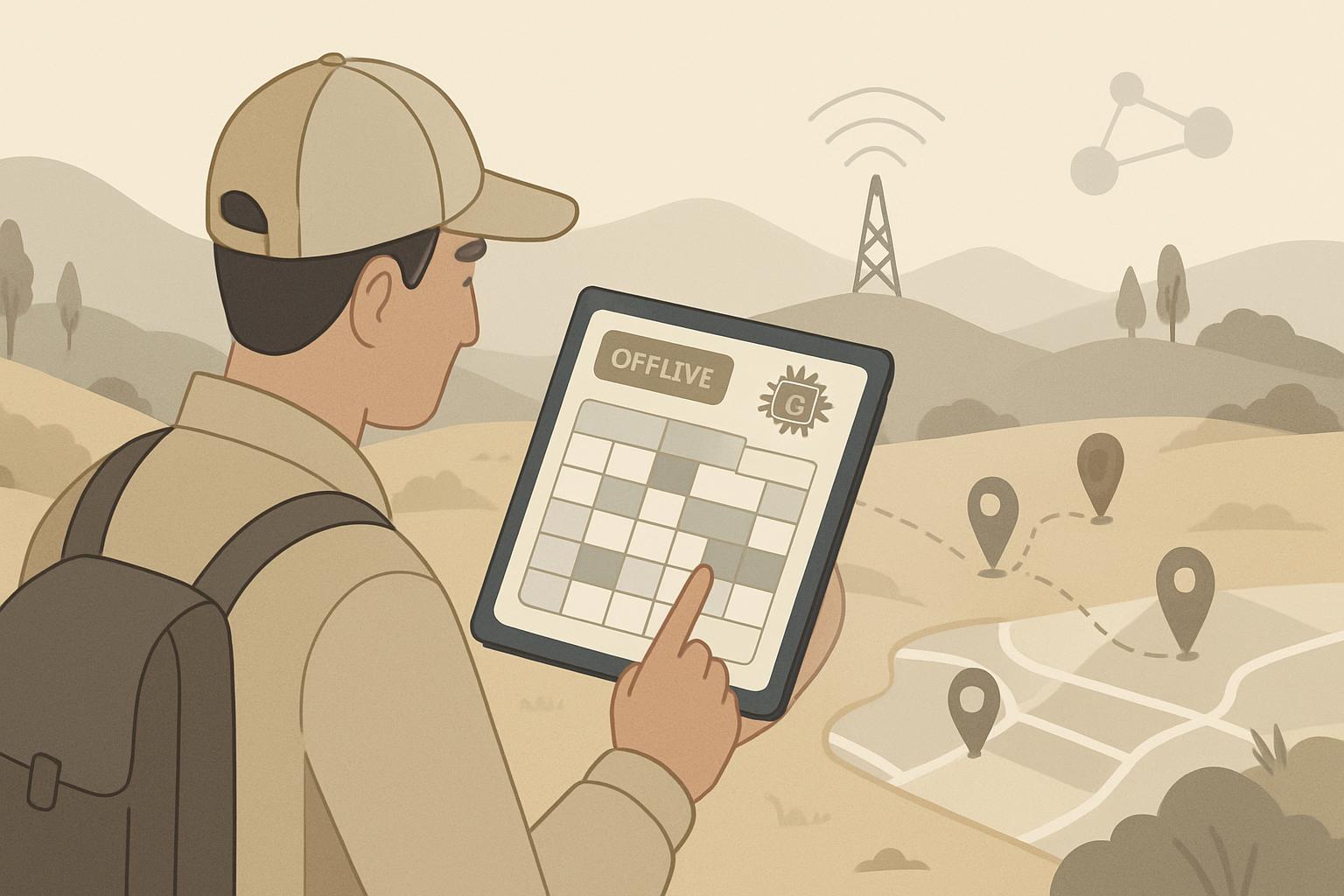
Offline-first AI scheduling enables field teams and organizations operating in low-connectivity regions to maintain productivity, reduce service delays, and avoid costly failures by doing core scheduling and decisioning locally. Studies show that up to 40% of economic activity in remote and rural sectors is disrupted by unreliable connectivity, so practical offline-first workflows can cut service interruptions by a large margin while improving SLA compliance and worker efficiency.
Introduction
Business professionals deploying AI-enabled field operations must reconcile two realities: modern scheduling solutions drive efficiency, but many field teams operate where continuous connectivity is not guaranteed. Offline-first AI scheduling provides a systems design approach that prioritizes local operation, graceful synchronization, and lightweight intelligence at the edge so teams can plan, execute, and audit work without being blocked by intermittent networks.
This article explains the practical workflows, architectural patterns, and implementation checklist that business leaders and engineering teams can use to roll out reliable offline-first scheduling for field teams in low-connectivity regions. It blends operational guidance with technical strategies, KPIs, and security considerations to support informed decisions and vendor evaluations.
Quick Answer: Build scheduling clients that operate locally with cached rules and incremental sync, support conflict resolution, and apply lightweight edge ML for real-time adjustments. Prioritize pre-shift sync, local decision logs, and post-shift consolidation to preserve data integrity and operational continuity.
Why Offline-First Matters for Field Teams and Low-Connectivity Regions
Connectivity Realities
Many field operations — utilities, telecom tower maintenance, humanitarian logistics, last-mile delivery, and agricultural advisory services — routinely encounter weak or sporadic connectivity. Mobile coverage can be patchy and bandwidth constrained, while data costs remain high in many markets. Relying on the cloud as a single point of failure undermines responsiveness and exposes operations to risk.
Operational Risks of Always-Online Dependence
When scheduling systems require persistent connectivity, the following risks commonly occur:
- Service delays and missed appointments due to inability to access schedules or updates.
- Duplication of work or conflicting assignments when updates are not propagated immediately.
- Poor worker experience and lower first-time-fix rates because technicians cannot access context or instructions.
- Loss of auditable records if events cannot be stored locally and transmitted later.
Quick Answer: Offline-first reduces these risks by ensuring local autonomy, resilient data capture, and deferred synchronization with conflict-aware merge strategies.
Core Principles of Offline-First AI Scheduling
Local-first Data Storage and Sync
Design clients to treat local storage as the primary source of truth during offline operation. This means:
- Caching schedules, constraints, worker profiles, and relevant assets on-device before shifts.
- Recording all events (status changes, GPS traces, time stamps, photos) locally with stable identifiers.
- Using incremental synchronization to upload deltas and download changes when connectivity permits.
Progressive Enhancement and Graceful Degradation
Implement progressively enhanced capabilities so the application offers the best experience available given current resources. Examples include:
- Full scheduling UI and local route optimization when offline.
- Reduced media upload quality or deferred telemetry during low bandwidth windows.
- Fallback behavior for real-time services (e.g., push notifications) that converts to in-app message queues.
Conflict Resolution and Merge Strategies
Conflicts are inevitable when multiple actors modify schedules independently. Practical approaches include:
- Operational precedence rules (e.g., dispatcher overrides technician proposals or vice versa).
- CRDTs (Conflict-free Replicated Data Types) or OT (Operational Transformation) for deterministic merges when suitable.
- Human-in-the-loop resolution flows for business-critical conflicts flagged for manager review.
Practical Workflows for Field Teams
Workflow 1: Pre-Shift Sync and Planning
Pre-shift workflows prepare the field team for a disconnected day:
- Automatic pre-shift sync window: clients pull new assignments, asset data, safety documentation, route maps, and offline models before work begins.
- Local validation: the mobile client validates that required assets and materials are available and flags missing items for pickup or substitution.
- Local optimization: lightweight route optimization and schedule packing runs on-device to minimize travel and align tasks with worker certifications.
Workflow 2: In-Field Scheduling and Rescheduling
During the shift, the system supports autonomous decisioning:
- Technicians accept, decline, or propose schedule changes locally; actions are recorded with timestamps and version IDs.
- Edge AI models prioritize tasks (e.g., emergency over routine) and suggest feasible swaps based on local constraints.
- When connectivity is available, the client attempts immediate sync; otherwise it queues updates for later reconciliation.
Workflow 3: Post-Shift Consolidation and Auditing
After the shift, consolidate local records and reconcile with the central system:
- Batch upload of events, audit logs, photos, and diagnostics once a reliable connection is detected.
- Server-side merge applies conflict resolution rules and triggers follow-up tasks (billing, SLA updates, dispatch adjustments).
- Audit trails ensure regulatory compliance and provide material for ML model retraining.
Quick Answer: Enforce a simple three-phase workflow — pre-shift sync, local operational autonomy, and post-shift consolidation — supplemented by lightweight edge AI to improve decisions while offline.
Architecture Patterns and Tech Stack Recommendations
Data Models and Serialization
Use compact, versioned data models that minimize payloads and support forward/backward compatibility. Recommended practices include:
- Protobuf, MessagePack, or compact JSON schemas with explicit version fields.
- Immutable event logs and append-only records to simplify reconciliation.
- Stable identifiers (UUIDs) for tasks and transactions to avoid duplicate records after sync.
Sync Protocols and Bandwidth Optimization
Design synchronization to be incremental, resumable, and tolerant of high latency. Tactics include:
- Delta sync APIs that return only changed entities since a given checkpoint.
- Compression and adaptive media handling: transmit lightweight thumbnails first, full-resolution media later when on Wi‑Fi.
- Backoff and retry policies tuned for mobile networks to avoid battery drain and excessive data costs.
Edge AI and Model Update Strategies
Edge intelligence should be lightweight and resilient to model staleness:
- Deploy quantized models for inference on-device, focusing on heuristics for priority scoring and route adjustment.
- Use server-driven training and periodic model pushes; allow clients to fall back to rule-based logic if models are outdated.
- Log inference inputs and outcomes for offline batch upload to improve future training rounds.
Sign up for our newsletter
Get the latest updates, product launches, and helpful tips delivered straight to your inbox.
Implementation Checklist
Use the checklist below to evaluate readiness and guide deployment:
- Baseline: Identify connectivity profiles and mission-critical operations that must work offline.
- Data design: Create versioned schemas, stable IDs, and compact serialization.
- Client capability: Build local caching, event queues, and an offline UI with graceful degradation.
- Sync strategy: Implement delta sync, resumable uploads, and conflict resolution policies.
- Edge AI: Deploy small inference models and maintain a retraining pipeline for periodic updates.
- Security: Ensure local encryption, authenticated sync sessions, and secure key management.
- Testing: Run field trials with representative connectivity conditions and measure KPIs.
Measuring Success and KPIs
Track metrics that demonstrate operational resilience and business impact. Key KPIs include:
- Offline task completion rate: percent of tasks completed while disconnected.
- Sync success rate and average sync latency when connectivity is available.
- First-time-fix rate and SLA adherence compared to pre-deployment baselines.
- Data integrity metrics: conflict incidence rate and time-to-resolution for conflicted records.
- Worker satisfaction and average handling time under offline conditions.
Security, Privacy, and Compliance Considerations
Offline-first systems introduce specific security trade-offs that must be mitigated:
- Encrypt sensitive local data at rest and enforce strong device authentication.
- Limit local data retention by policy and support remote wipe for compromised devices.
- Ensure synchronization channels are authenticated and encrypted using TLS with mutual authentication when possible.
- Maintain auditable logs for regulatory compliance and ensure that offline events are tracked to preserve chain-of-custody.
Key Takeaways
Practical summary for business decision-makers and technical leads:
- Adopt an offline-first mindset: local operation must be primary during outages, not a fallback mode.
- Implement pre-shift sync, local autonomy with edge AI, and post-shift consolidation to maintain continuity.
- Design data models, sync protocols, and conflict resolution tolerant of intermittent connectivity.
- Measure impact with targeted KPIs and iterate using field data to improve models and workflows.
Frequently Asked Questions
How does offline-first AI scheduling differ from traditional cloud-based scheduling?
Offline-first prioritizes local storage, local decision logic, and deferred synchronization so that core scheduling and execution continue without active connectivity. Traditional cloud-centric scheduling assumes constant connectivity and central authority for decisions, which can fail in low-connectivity scenarios.
Can edge AI provide the same decision quality as cloud models?
Edge AI offers targeted, lower-compute models optimized for on-device inference. While they may not match the full complexity of cloud models, well-designed edge models combined with rules-based fallbacks deliver practical, high-quality decisions for scheduling and prioritization in the field.
What strategies prevent data loss during extended offline periods?
Key strategies include append-only local event logs, regular local backups, persistent identifiers to avoid duplication, and robust retry/resume sync protocols. Local encryption and periodic manual checkpoints (e.g., handover sync at shift changes) further reduce risk.
How should conflicts between local and server schedules be handled?
Apply deterministic conflict-resolution policies: use operational precedence, CRDTs for supported data shapes, or flag conflicts for human resolution where business consequences are high. Clear audit trails and notifications help managers make informed decisions quickly.
What are realistic bandwidth optimization techniques for media-heavy workflows?
Transmit low-resolution thumbnails or prioritized metadata first, defer full-resolution media until Wi‑Fi is available, and use adaptive compression. Also consider selective capture (e.g., photos only for exceptions) and client-side deduplication.
How do I validate an offline-first deployment before full rollout?
Run pilot programs in representative geographies with simulated and real connectivity profiles. Measure the KPIs noted earlier, collect qualitative feedback from field workers, and iterate on UI/UX, data sync heuristics, and conflict policies before scaling.
Sources and further reading: International Telecommunication Union connectivity data and reports provide context on global connectivity challenges (ITU Statistics), while practical guides on progressive web apps and offline patterns are useful for implementation details (Google Developers: Working with Offline). Economic analysis on connectivity impacts can be found through the World Bank and related studies (World Bank).
Sign up for our newsletter
Get the latest updates, product launches, and helpful tips delivered straight to your inbox.
Scheduler
Hand your calendar to an assistant that never drops a thread.
Keep reading

What the Data Says About Why Your Work Calendar Feels Broken
The average knowledge worker loses 103 hours a year to unnecessary meetings, and half of all meetings land right in the middle of peak focus hours, per Asana and Microsoft's own research. Here's what the data says is actually breaking calendars, and where AI agents can help.
![Personal CRM for Busy Professionals — Proven [Expert Guide]](https://nuxxt0us9k7umi1n.public.blob.vercel-storage.com/blog-covers/6a4ebc1bc9f0db5df88f43d4_article-4c713aac-f045-433e-a0f9-fa40d8d41b92.jpeg)
Personal CRM for Busy Professionals — Proven [Expert Guide]
Discover Personal CRM for Busy Professionals: Use Basic AI to Remember Names, Promises, and Follow‑Ups Without Extra Effort — Get the full breakdown

Paper-to-Calendar Made Easy: How to Capture Notes, Sticky Ca
Learn about Paper‑to‑Calendar Made Easy: Capture Notes, Sticky Cards and Voice Memos and Turn Them into Calendar Actions Using Basic AI Tools in this comprehensive SEO guide.