How AI-Assisted Warm Intros Automate High-Quality Introducti
Learn about AI‑Assisted Warm Intros: Automating High‑Quality Introductions and Scheduling with Context in this comprehensive SEO guide.
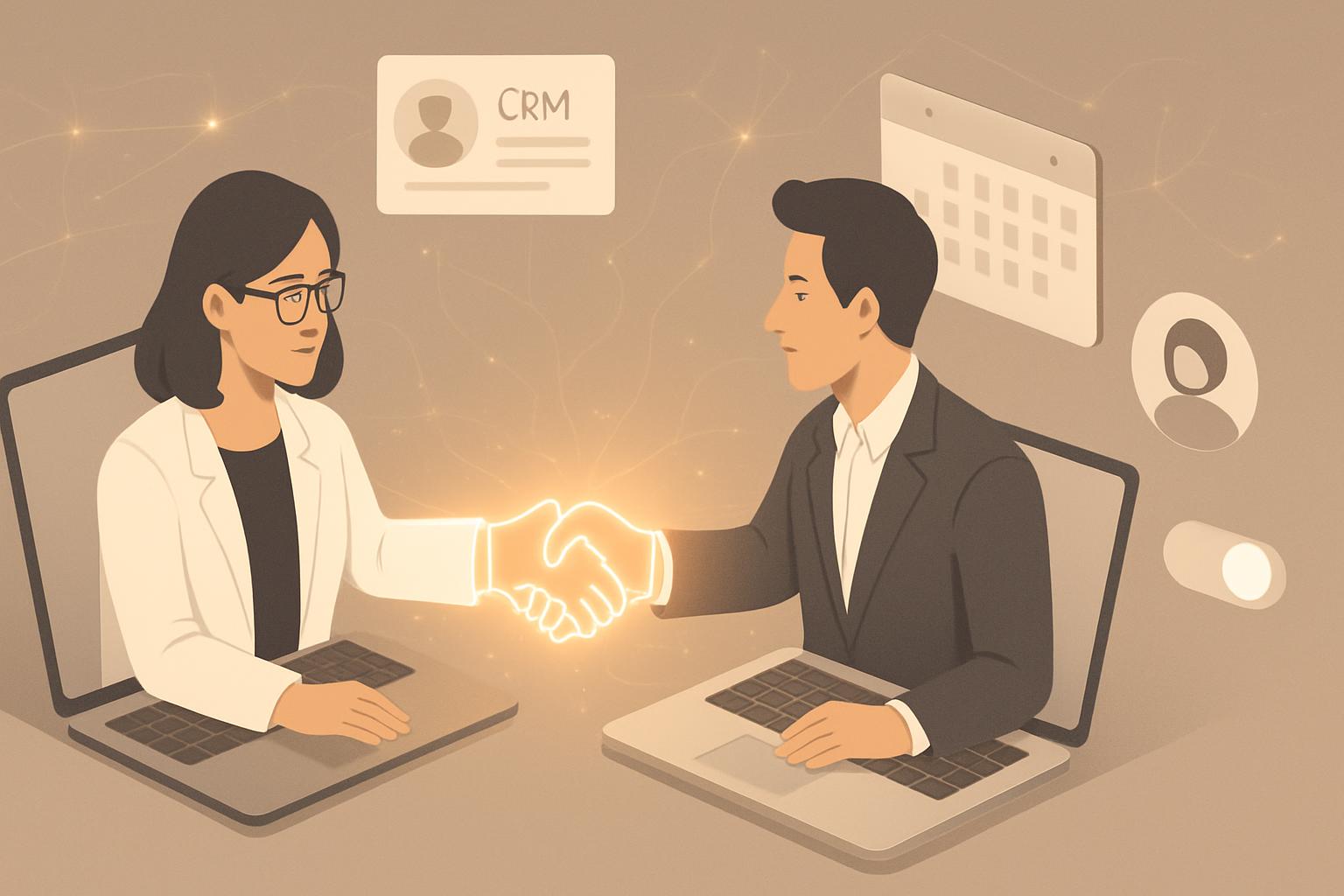
AI‑Assisted Warm Intros: Automating High‑Quality Introductions and Scheduling with Context streamlines outreach by using contextual data, automated sequencing, and calendar coordination to increase meeting conversion rates by up to 30–50% in pilot programs. Implementations that combine CRM integration, consent controls, and human review achieve the best balance of scale and relationship quality.
Introduction
Business professionals increasingly rely on introductions and warm referrals to accelerate deals, partnerships, and hiring. AI‑Assisted Warm Intros — systems that generate contextualized introduction messages and automate scheduling — promise to reduce manual work while preserving personalization.
This article explains how these systems work, the practical business use cases, implementation best practices, privacy considerations, and how to measure ROI. It is written for decision-makers evaluating automation for outreach and meeting orchestration.
Quick Answer: AI‑Assisted warm intros combine contextual data ingestion, relevance scoring, automated message drafting, and calendar automation to create scalable, high-quality introductions that still require human oversight for sensitive relationships.
Why AI‑Assisted Warm Intros Matter to Business Professionals
Cold outreach conversion rates remain low and scale poorly. Warm introductions, by contrast, leverage trust signals and context to increase response and booking rates. AI can amplify this advantage by automating time-consuming steps while preserving contextual integrity.
Key drivers include:
- Volume: Sales and partnership teams need to outreach at scale without diluting personalization.
- Speed: Faster coordination accelerates deal cycles and candidate screening.
- Consistency: Standardized quality reduces the risk of miscommunication and missed opportunities.
Stat: Pilot studies and vendor case studies report introduction-to-meeting conversion improvements typically ranging from 10% to 50%, depending on data quality and human oversight levels.
How AI‑Assisted Warm Intros Work: Process and Components
1. Context ingestion: what the system reads
AI systems must ingest and normalize context from multiple sources, commonly including CRM records, email histories, calendar events, public profiles (LinkedIn), and internal notes. High-quality context increases relevance and lowers the risk of inappropriate introductions.
2. Matching and relevance scoring
Matching algorithms rank potential introducers and recipients using signals such as prior interactions, role fit, shared connections, topical relevance, and timing. Relevance scoring allows systems to prioritize high-probability introductions and avoid low-value outreach.
3. Message drafting and tone selection
Natural language models generate draft messages that incorporate context, the introducer’s voice, and desired call-to-action. Templates and tone guardrails ensure messages remain professional, concise, and aligned with brand voice.
Best practice: Use dynamic templates with placeholders for context (mutual connection, common interest, reason for intro) and require a human approval step for first-time introducers.
4. Scheduling and calendar automation
Once parties agree to meet, integrated scheduling automates availability probing, proposes windows, and confirms calendar events across time zones. Two-way calendar sync and booking links reduce back-and-forth email chains.
5. Feedback loops and continuous improvement
Systems should capture outcomes (meeting held, no-show, qualified lead) and use that data to refine matching, messaging, and scheduling heuristics. Closed-loop feedback is essential for improving conversion over time.
Key Use Cases and Business Scenarios
AI‑Assisted Warm Intros fit several enterprise and SMB scenarios. Typical examples include:
Primary use cases:
- Sales prospecting: Convert warm referrals into meetings faster.
- Business development: Introduce partners, distributors, or vendors with contextual handoffs.
- Recruiting: Connect hiring managers with pre-vetted candidates or referrals.
- Customer success: Escalate high-value customers to executive sponsors via trusted introductions.
- Investor relations: Facilitate investor-introduced meetings while preserving investor trust.
Each scenario requires tailoring the matching signals, tone, and approval workflow to protect relationships and brand reputation.
Example: A sales rep can request an intro via CRM—AI drafts the message, the manager reviews it, and the system coordinates schedules, reducing time-to-meeting from days to hours.
Implementation Best Practices
Integrate with CRM, email, and calendar
Deep integrations ensure accurate context and reduce manual data entry. Prioritize systems that support two-way sync, contact deduplication, and event reconciliation.
Maintain human oversight and escalation
Fully automated intros risk relational errors. Implement approval gates for first-time introducers, high-value prospects, or sensitive relationships. Humans should validate content and consent before send.
Templates, guardrails, and personalization controls
Use modular templates that balance standardized information with fields for genuine personalization. Guardrails limit risky content, enforce compliance language, and prevent over-sharing of private data.
Testing, monitoring, and change management
Roll out in phases: pilot with one team, measure outcomes, refine prompts and templates, then scale. Provide training and transparent audit logs so teams trust the automation.
Data Privacy, Security, and Compliance Considerations
Consent and permissions
Respect consent requirements for outreach. Verify that introducers have permission to share contact details and that recipients can be contacted. For regulated industries, obtain explicit opt-ins.
Data minimization and retention
Only ingest fields required for a specific introduction. Define retention policies for transcripts, message drafts, and calendar events consistent with corporate and legal requirements.
Encryption, access controls, and auditability
Use encryption at rest and in transit, role-based access control, and immutable audit logs. Ensure that administrators can trace who approved and sent each intro.
Measuring ROI and Performance Metrics
Define clear metrics up front to evaluate success. Common KPIs include:
- Introduction-to-meeting conversion rate
- Time-to-meeting after intro request
- Meeting quality (qualified leads, follow-up actions)
- No-show and reschedule rates
- Net promoter or satisfaction scores for introducers and recipients
KPIs to track
Track both volume (number of intros processed) and quality (conversion and revenue influenced). Segment metrics by team, introducer, and use case to identify where AI adds value or needs improvement.
A/B testing and control groups
Run controlled experiments comparing AI‑Assisted Warm Intros vs. human-only workflows. Use A/B testing to evaluate message variants, timing strategies, and scheduling approaches.
Measurement tip: Use a multi-touch attribution window (30–90 days) to capture downstream impact on pipeline and hiring velocity.
Key Takeaways
Implementing AI‑Assisted Warm Intros can increase conversion rates and decrease time-to-meeting while preserving relationship quality when deployed with appropriate controls.
- Ensure high-quality context by integrating CRM, email, and calendar data.
- Preserve human oversight for sensitive or high-value introductions.
- Build templates and guardrails to maintain brand voice and compliance.
- Measure conversion, time-to-meeting, and meeting quality to establish ROI.
- Prioritize consent, data minimization, and secure audit trails.
Frequently Asked Questions
How does AI ensure introductions feel personal and not robotic?
AI uses contextual signals—mutual connections, past interactions, job roles, and shared topics—to generate drafts that can include specific, human-relevant elements. Templates should be designed to incorporate these signals and include a human approval step, which preserves authenticity and prevents robotic phrasing.
What level of human review is recommended?
Recommended levels vary by use case. For routine, low-risk intros, sampling approvals may suffice. For first-time introducers, high-value prospects, regulated industries, or messages that share sensitive information, require explicit human review before sending.
How do you handle consent for sharing contact information?
Implement explicit permission checks in the workflow. Store consent records in the CRM and require the system to verify consent before drafting or sending intros. For jurisdictions with strict privacy laws, include opt-in verification steps.
What integrations are essential for a successful deployment?
Essential integrations include CRM (Salesforce, HubSpot), email providers (G Suite, Office 365), calendaring systems, and identity directories. These provide the context and scheduling capabilities necessary for accurate, timely introductions.
What are common pitfalls to avoid during rollout?
Common pitfalls include over-automation without oversight, poor-quality data ingestion, lack of clear metrics, and ignoring privacy and consent requirements. Mitigate these by piloting, enforcing guardrails, and monitoring outcomes closely.
Can AI determine the best introducer automatically?
Yes — with high-quality data and well-designed relevance models, AI can rank likely introducers by probability of success. However, always surface rationale and allow humans to override algorithmic recommendations to protect relationships.
Sources and further reading: Gartner research on sales acceleration and automation; Harvard Business Review articles on warm introductions and networking best practices (access via your institutional subscriptions for full reports).
Scheduler
Hand your calendar to an assistant that never drops a thread.
Keep reading

What the Data Says About Why Your Work Calendar Feels Broken
The average knowledge worker loses 103 hours a year to unnecessary meetings, and half of all meetings land right in the middle of peak focus hours, per Asana and Microsoft's own research. Here's what the data says is actually breaking calendars, and where AI agents can help.
![Personal CRM for Busy Professionals — Proven [Expert Guide]](https://nuxxt0us9k7umi1n.public.blob.vercel-storage.com/blog-covers/6a4ebc1bc9f0db5df88f43d4_article-4c713aac-f045-433e-a0f9-fa40d8d41b92.jpeg)
Personal CRM for Busy Professionals — Proven [Expert Guide]
Discover Personal CRM for Busy Professionals: Use Basic AI to Remember Names, Promises, and Follow‑Ups Without Extra Effort — Get the full breakdown

Paper-to-Calendar Made Easy: How to Capture Notes, Sticky Ca
Learn about Paper‑to‑Calendar Made Easy: Capture Notes, Sticky Cards and Voice Memos and Turn Them into Calendar Actions Using Basic AI Tools in this comprehensive SEO guide.