How Closed-Loop, AI-Driven Scheduling Could Disrupt Public B
Learn about The End of Free Scheduling Links? How Closed‑Loop, AI‑Driven Scheduling Could Disrupt Public Booking Platforms in this comprehensive SEO guide.
Introduction
Public scheduling links have become a staple for sales teams, consultants, and customer-facing professionals. They’re simple: share a URL, let people book a slot. But the next generation of scheduling uses closed-loop systems powered by AI to personalize flows, control availability contextually, and close the data loop between marketing, CRM, and operations. That shift could upend existing public booking marketplaces and change how businesses manage time as a resource.
Quick Answers: Core Questions
Background: How Public Booking Platforms Work Today
Public booking links are usually simple: a hosted page that exposes an individual's availability based on calendar integrations and user-configurable rules. Popular platforms have scaled by offering easy links, calendar syncing, and free tiers that lower adoption friction for individuals and small teams. They monetize through premium features, teams, and integrations with CRM and conferencing tools [3].
These platforms succeed because they are frictionless: a professional can share a link in an email or on a website, prospects make self-serve bookings, and both parties receive calendar events. However, the model has limitations when businesses need contextual routing, conversion optimization, or centralized data ownership.
What Is Closed-Loop, AI-Driven Scheduling?
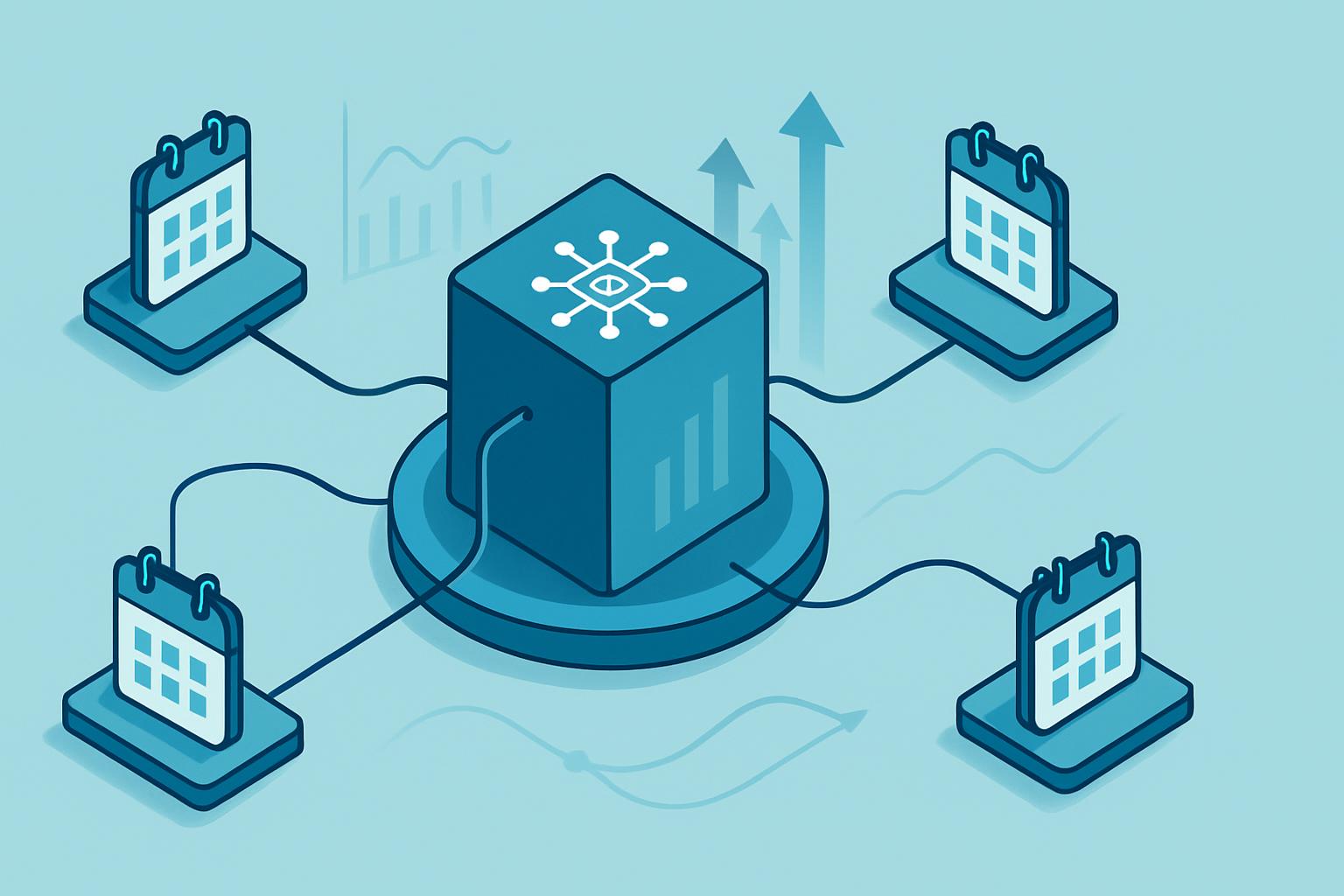
Closed-loop scheduling refers to systems that not only manage availability but also connect booking events back into business systems (CRM, marketing automation, billing) and use AI to adapt the scheduling experience in real time. Key characteristics:
- Centralized data capture and ownership: bookings feed back into customer records and performance analytics.
- AI-driven personalization: flows adapt to user intent, historical behavior, and business priorities.
- Contextual availability: slots are offered based on predictive value (likelihood to convert) rather than raw free/busy status.
- Closed UX: booking occurs in a controlled, branded environment or via embedded widgets that limit public discovery and raw link sharing.
These systems can be built in-house, offered by large CRMs, or provided by specialized vendors who integrate AI and policy controls into scheduling flows [1][4].
How Closed-Loop Scheduling Works — Technical and Business Mechanics
1. Data Flow and Integration
Bookings feed into a single data layer that unites marketing signals, calendar events, CRM records, and product usage. This closed loop allows automated follow-ups, real-time routing, and performance measurement that public links alone cannot provide.
2. AI Decisioning
Machine learning models prioritize available slots, recommend rescheduling, and present personalized offers (shorter meetings, premium add-ons, or alternative channels) based on customer segment, lifetime value, and behavior.
3. Controlled Exposure
Rather than a publicly shareable URL, closed-loop scheduling often uses ephemeral links, embedded widgets, or authenticated flows that require a lightweight verification step (email, token). This reduces leakage and enables more accurate conversion attribution.
4. Monetization and Optimization
Systems can insert paid upgrade options, premium time windows, or prioritized routing to higher-value reps. A/B testing and continuous learning optimize both conversion rates and downstream revenue.
Why Businesses Would Prefer Closed-Loop Scheduling
- Better conversion and qualification: AI can present optimal slots and qualification questions inline to maximize meeting quality.
- Data ownership: closed loops retain booking metadata under the company’s control for analytics and personalization.
- Reduced no-shows: automated reminders, adaptive rescheduling, and incentives reduce churn and missed appointments.
- Revenue opportunities: premium booking tiers and prioritized scheduling for high-value customers.
- Compliance and privacy: centralized control simplifies consent, data retention, and audit trails important in regulated industries.
How This Could Disrupt Public Booking Platforms
Closed-loop scheduling changes the value proposition. Where public links are a convenient commodity, closed systems become strategic infrastructure. Potential disruption vectors:
- Reduced usage for high-value bookings: public links may remain for low-stakes scheduling but be phased out for conversions where personalization matters.
- API and access wars: enterprises may restrict calendar access or negotiate exclusive integrations, limiting platform capabilities.
- Shift to embedded experiences: businesses will embed scheduling into their apps and websites rather than point to external links, reducing platform traffic.
- Monetization pressure: public platforms may need to charge for privacy, white-labeling, or AI features to retain enterprise customers.
Business Impacts: Risks and Opportunities
Revenue and Monetization
Opportunity: New paid tiers (premium time slots, prioritized routing) and conversion-driven pricing models can increase monetization for both vendors and businesses implementing closed-loop scheduling. Risk: public platforms lose enterprise revenue if they do not adapt.
Privacy, Compliance, and Security
Opportunity: Closed systems can be configured to meet HIPAA, GDPR, and industry-specific requirements more easily than open links. Risk: increased complexity and responsibility for organizations that now own the data lifecycle.
User Experience and Conversion
Opportunity: Tailored booking experiences increase conversion and reduce friction. Risk: over-optimization could create perceived gatekeeping, harming brand sentiment if not handled transparently.
Platform and Ecosystem Economics
Opportunity: Platforms that incorporate closed-loop features become strategic partners for enterprises. Risk: network effects of public platforms may weaken as enterprise traffic moves to proprietary systems.
Implementation Steps for Business Leaders
Adopting closed-loop, AI-driven scheduling requires cross-functional alignment. Recommended steps:
- Define use cases: prioritize meetings where conversion and data capture matter (sales demos, onboarding, clinical appointments).
- Assess data readiness: inventory CRM, calendar, marketing, and consent data needed to close the loop.
- Choose a model: build in-house, buy a vendor solution, or partner with a CRM that offers AI scheduling.
- Run pilots: A/B test closed-loop flow vs. public links focusing on conversion, no-show rates, and customer satisfaction.
- Implement governance: ensure privacy, retention, and access policies are defined and enforced.
- Scale and iterate: use AI metrics to refine routing, slot allocation, and monetization strategies.
Contextual Background: Privacy, Regulation, and Ethics
Closed-loop systems concentrate customer data, which increases value but also regulatory exposure. Businesses must balance personalization with privacy: implement consent-first approaches, data minimization, and clear opt-outs. In healthcare or financial services, explicit compliance (HIPAA, GLBA, GDPR) must guide architecture and vendor selection [5]. Ethical frameworks should govern automated decisions (e.g., who receives priority slots) to avoid discrimination or unfair treatment.
Key Takeaways
- Closed-loop, AI-driven scheduling optimizes conversion and centralizes data ownership, reducing the attractiveness of free public scheduling links for high-value appointments.
- Businesses that adopt closed-loop approaches can increase efficiency, reduce no-shows, and unlock monetization opportunities; however, they assume greater responsibility for privacy and governance.
- Public booking platforms must evolve by offering closed-loop features, enterprise-grade privacy controls, or risk losing market share for premium scheduling use cases.
- Implementation requires cross-functional coordination, pilot testing, and an ethical approach to automated prioritization.
Frequently Asked Questions
Will closed-loop scheduling make free public links obsolete?
Not entirely. Free public links will remain useful for low-value, ad hoc scheduling. However, for conversions, high-value client interactions, and regulated contexts, closed-loop solutions offer better outcomes and are likely to replace public links over time.
How quickly can a business shift from public links to closed-loop scheduling?
With the right integrations and vendor support, basic closed-loop pilots can run in 4–12 weeks. Full-scale adoption — including AI tuning, governance, and CRM integration — typically takes 3–12 months depending on complexity.
What are the main technical requirements?
Integrations with calendar systems, CRM, marketing automation, and analytics; secure data storage and consent tracking; AI models or vendor ML services for routing and personalization; and UX components (embedded widgets or ephemeral links) to control the booking flow.
How does closed-loop scheduling affect customer privacy?
It centralizes and increases the amount of customer data captured, which can benefit personalization but also heightens privacy risks. Organizations must implement consent management, minimize data collection to what’s necessary, and ensure secure storage and processing.
Can small businesses benefit or is this only for enterprises?
Small businesses can benefit, especially if scheduling impacts revenue (e.g., professional services, clinics). Vendors are increasingly packaging closed-loop features for SMBs, but the ROI calculus depends on booking volume and deal value.
What should public booking platforms do to stay relevant?
Offer white-label or embedded closed-loop features, improve enterprise-grade privacy and governance, provide AI-driven optimization tools, and develop partnerships with CRMs to retain strategic integrations.
Sources
[1] McKinsey & Company analysis of AI-driven sales automation and scheduling impact, 2023. URL: https://www.mckinsey.com
[2] Vendor case studies demonstrating 20–40% efficiency gains in pilot deployments (vendor reports, 2022–2024).
[3] Industry reports on scheduling platform monetization strategies (SaaS market research, 2021–2024).
[4] Harvard Business Review: Personalization and automated decisioning in customer operations, 2022. URL: https://hbr.org
[5] GDPR and HIPAA guidance on scheduling and data processing for appointments, official regulatory guidance pages.
Scheduler
Hand your calendar to an assistant that never drops a thread.
Keep reading

The Science of the Meeting Buffer: What Brain Research Says About Back-to-Back Calls
Microsoft wired 14 people with EEG caps to test back-to-back meetings versus meetings with breaks. The stress data was specific enough that Microsoft changed how Outlook works.
Low-Prep External Intros: Proven Scheduling Frameworks Now
Cut Low-Prep External Intros: Scheduling Frameworks That Minimize Prep and Back-and-Forth for Brief Vendor and Prospect Calls. Read the expert analysis
Multi-Location Site Visit Scheduling: Proven Playbook
Optimize Multi-Location Site Visit Scheduling—visit 4–6 nearby offices/day with route optimization, timeboxing, and buffers. Get the full breakdown