How to Integrate Assistant Platforms with Corporate Identity
Learn about Integrating Assistant Platforms with Corporate Identity (SSO, SCIM) and IT Workflows in this comprehensive SEO guide.
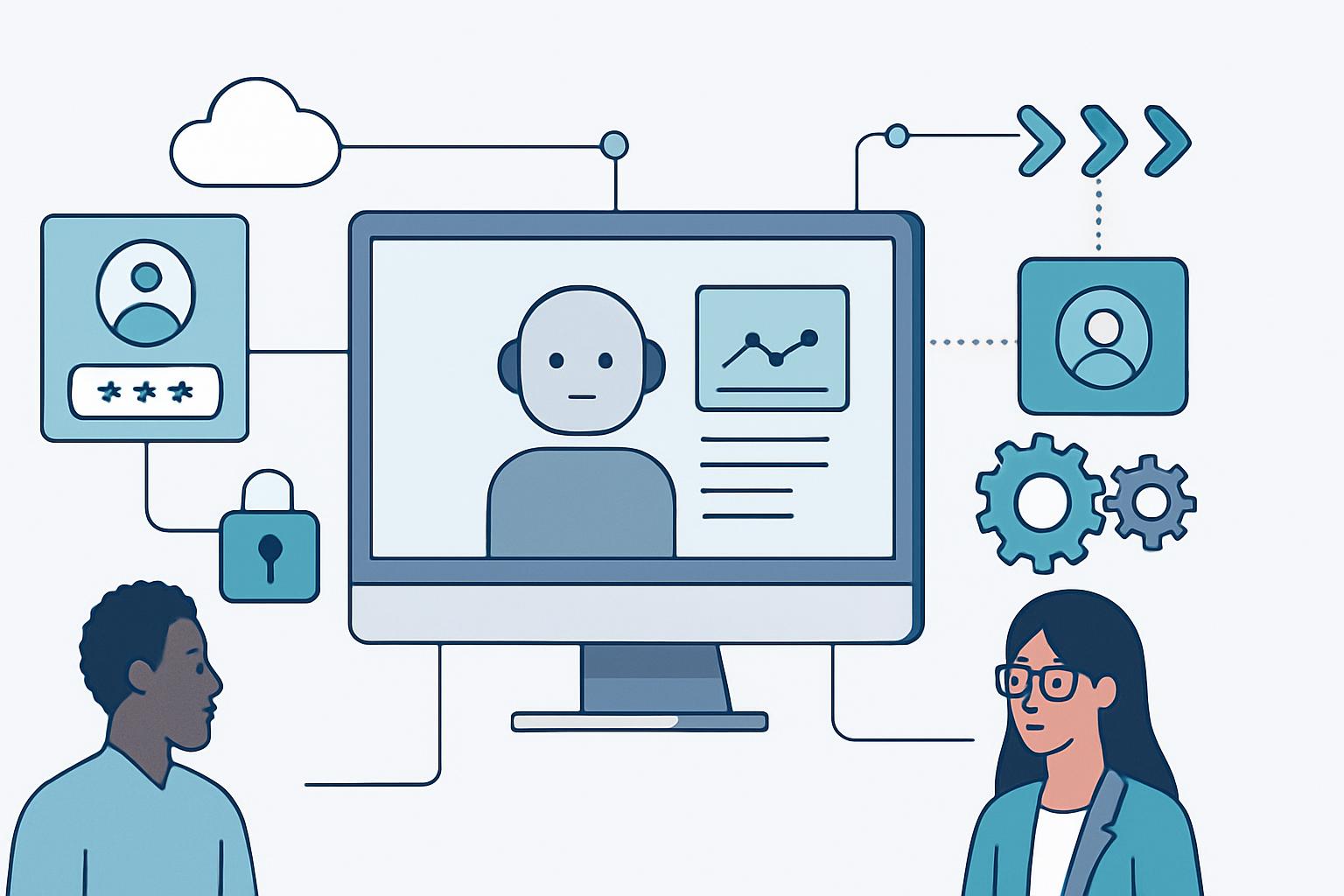
Integrating assistant platforms with corporate identity via SSO and SCIM and embedding them into IT workflows reduces security risk, speeds onboarding, and improves auditability — studies show automated provisioning can cut user access errors by up to 70% and improve time-to-productivity by 50%. Implement a phased plan (assess, design, pilot, scale) that enforces SSO (OIDC/SAML), SCIM provisioning, RBAC/ABAC, centralized logging, and automated workflows to realize measurable operational and security benefits.
Introduction
This article explains how business and IT leaders can integrate assistant platforms (conversational agents, virtual assistants, or AI copilots) with corporate identity systems and enterprise IT workflows. It covers SSO and SCIM standards, recommended architecture patterns, implementation steps, security and compliance considerations, and operational practices to run integrated assistant platforms at scale.
Why integrate assistant platforms with corporate identity?
Integrating assistant platforms with the corporate identity stack ensures consistent authentication, access control, and lifecycle management. It converts a point product into an enterprise service that respects existing policies, reduces admin overhead, and supports audit and compliance requirements.
Business benefits
Key business outcomes include:
- Faster onboarding: automatic account provisioning and entitlement assignment.
- Reduced risk: centralized authentication and MFA reduce credential sprawl.
- Better governance: consistent RBAC/ABAC policies across identity and assistants.
- Operational efficiency: automated deprovisioning cuts orphaned access.
Key statistics and facts
Relevant industry findings (examples):
- Automated provisioning reduces helpdesk tickets for access by a large margin (often cited reductions of 40–70%).
- Centralized SSO adoption improves authentication security and user adoption; OIDC is preferred for modern APIs and SAML remains common in enterprise SSO.
- SCIM (RFC 7644/7643) is the standardized approach for provisioning across SaaS and platform services.
Core components: SSO, SCIM, RBAC, logging
Successful integrations rely on a small set of identity and security primitives. Understand each and how the assistant platform consumes them.
Single Sign-On (SSO) — SAML, OAuth2, OpenID Connect
SSO provides authentication for users and services. Modern assistant platforms commonly support:
- OpenID Connect (OIDC) / OAuth 2.0 for web/API sign-in and token exchange.
- SAML 2.0 for legacy enterprise SSO integrations.
- Best practice: use OIDC for user authentication and OAuth2 client credentials for service-to-service calls; enforce short-lived tokens and refresh-token policies.
SCIM — provisioning and lifecycle management
SCIM automates user provisioning, updates, and deprovisioning across identity providers and target applications. Implement SCIM to:
- Auto-create assistant accounts tied to corporate identities.
- Synchronize group membership and entitlements.
- Automate deprovisioning when offboarding occurs.
Identity and access management (RBAC, ABAC)
Define role-based (RBAC) or attribute-based (ABAC) access models that map corporate roles to assistant capabilities. Key actions:
- Catalog assistant actions (read, write, admin, integrations).
- Map corporate roles/groups to assistant permissions via SCIM group sync or a policy engine.
- Apply least privilege and periodically review entitlements.
Audit, logging, and monitoring
Integrate assistant logs with SIEM and centralized observability platforms. Critical telemetry includes authentication events, provisioning events, admin actions, and data access requests. Maintain log retention policies that meet regulatory requirements and support investigations.
Implementation roadmap (phased approach)
Follow a staged plan to reduce risk and accelerate time to value. A phased approach reduces surprises, helps define success metrics, and provides control points.
Phase 1 — Assess
Activities:
- Inventory assistant capabilities and existing identity systems.
- Document required attributes, groups, and entitlements.
- Identify compliance and data residency constraints.
- Define success metrics (e.g., time-to-activate, ticket reduction, security KPIs).
Phase 2 — Design
Design decisions:
- Choose SSO protocol (OIDC vs SAML) based on ecosystem and APIs.
- Design SCIM schema mapping (user fields, group membership, custom attributes).
- Define RBAC/ABAC policies and approval workflows.
- Plan centralized logging and access review cadence.
Phase 3 — Implement (pilot)
Pilot scope and steps:
- Integrate SSO for a controlled set of pilot users.
- Enable SCIM provisioning for a specific department.
- Link group sync to assistant permissions and verify behavior.
- Monitor authentication and provisioning logs during pilot.
Phase 4 — Validate
Validation tasks:
- Conduct security tests (authentication flows, token handling, permission checks).
- Run user acceptance testing and collect feedback.
- Verify audit trails and SIEM integration.
Phase 5 — Operate and scale
Operationalize and scale across the enterprise:
- Roll out to additional business units based on pilot lessons.
- Automate ticketing and approval flows into ITSM (e.g., create tickets for exceptions).
- Schedule regular access reviews and compliance checks.
Integration patterns and architectures
Choose an architecture pattern that aligns with your identity estate, security posture, and operational model.
Pattern 1: Direct integration (IdP -> Assistant)
Properties:
- Simplest pattern: identity provider (IdP) directly issues tokens to the assistant platform using OIDC or SAML.
- SCIM endpoint on the assistant handles provisioning requests from the IdP.
- Best when assistant supports standard protocols and enterprise has consistent IdP configuration.
Pattern 2: Identity broker (IdP -> Broker -> Assistant)
Properties:
- A broker or IAM gateway mediates SSO, token translation, and attribute mapping.
- Useful for multi-IdP environments, protocol translations, or when central policy enforcement is required.
- Enables consistent logging and centralized token policy enforcement.
Pattern 3: Service mesh / sidecar integration
Properties:
- Use service mesh or sidecars for service-to-service authentication and policy enforcement.
- Appropriate when assistant components are decomposed microservices that require mTLS and fine-grained inter-service authentication.
Sign up for our newsletter
Get the latest updates, product launches, and helpful tips delivered straight to your inbox.
Security and compliance considerations
Embedding assistants into enterprise identity and workflows introduces risk vectors that require controls across authentication, data handling, and auditability.
Authentication hardening
Controls:
- Enforce MFA via the corporate IdP for privileged assistant functions.
- Use short-lived tokens and rotate client credentials regularly.
- Validate token audiences, issuers, and scopes on the assistant side.
Data handling and privacy
Consider data flow controls and PII handling:
- Limit personal data stored by assistants and prefer ephemeral contexts when possible.
- Implement data classification gating for sensitive queries and block or escalate when necessary.
- Log metadata, not sensitive contents, unless business case requires otherwise and is tightly controlled.
Compliance frameworks and evidence
Actions to satisfy auditors:
- Maintain provisioning and deprovisioning records (SCIM logs).
- Export authentication logs and role changes to SIEM for retention and reporting.
- Document policies for data retention, access reviews, and incident response.
Operationalizing within IT workflows
Integration succeeds when operations adopt the assistant platform as a managed service with clear SLAs, ticketing flows, and automation.
Change management and helpdesk integration
Best practices:
- Integrate provisioning exceptions and role requests with ITSM systems (e.g., ServiceNow, Jira Service Management).
- Use approval workflows for privileged role grants and record approvals for audit.
- Train helpdesk staff on SSO and provisioning flows for faster incident resolution.
Automation and workflow orchestration
Automate common tasks to reduce manual effort:
- Use SCIM for user lifecycle events triggered by HR or identity changes.
- Automate role changes based on attribute changes (job code, department).
- Link automation to notification systems for stakeholders (managers, security teams).
Metrics, SLAs, and monitoring
Establish measurable KPIs:
- Provisioning time (request-to-activation).
- Number of orphaned accounts and time to deprovision.
- Authentication failure rates and anomaly detections.
Quick Answers
How to authenticate users: Use OIDC for user flows and OAuth2 for service tokens; validate issuer, audience, and scopes.
How to provision users: Implement a SCIM 2.0 endpoint on the assistant and map IdP groups to assistant roles.
How to secure data access: Enforce RBAC/ABAC, log access events centrally, and apply data classification gates for sensitive interactions.
Key Takeaways
Immediate actions and final recommendations:
- Start with an assessment to map identity attributes, roles, and critical integrations.
- Standardize on OIDC for modern authentication and SCIM for provisioning when supported.
- Use a phased pilot to validate SSO and SCIM integrations before enterprise rollout.
- Centralize logs and enforce MFA for privileged assistant transactions.
- Automate lifecycle events via SCIM to reduce helpdesk load and orphaned access.
Frequently Asked Questions
1. What protocols should we use for SSO with assistant platforms?
Prefer OpenID Connect (OIDC) for modern web and API-based flows because it integrates well with OAuth2 and supports token-based authentication. Use SAML when integrating with legacy enterprise IdPs that require it. Always validate tokens server-side and apply MFA where necessary.
2. Does SCIM support groups and custom attributes?
Yes. SCIM 2.0 supports user and group resources and can be extended with custom attributes. Map corporate groups to assistant roles via SCIM group resources and include any necessary custom attributes in the schema, documenting mappings clearly.
3. How do we handle deprovisioning when employees leave?
Use automated SCIM deprovisioning triggered by the authoritative source (HR or IdP). Ensure deprovisioning removes access and logs the event. For safety, implement a grace period policy that aligns with company policy and regulatory requirements.
4. What logging should we forward to the SIEM?
Forward authentication events, token issuance and validation failures, provisioning actions, role changes, admin operations, and anomalous usage. Ensure logs contain sufficient metadata (user ID, timestamp, event type, source IP) but avoid logging sensitive content unless explicitly required and protected.
5. How can we map corporate roles to assistant capabilities?
Define a clear role matrix that lists assistant capabilities and maps them to corporate roles or groups. Implement mappings via SCIM group sync or a policy engine that evaluates attributes and issues permissions accordingly. Keep the matrix versioned and review it periodically.
6. Can we integrate assistants with multiple identity providers?
Yes. Use an identity broker or IAM gateway to consolidate multiple IdPs, translate protocols, and centralize policy enforcement. This pattern simplifies attribute mapping and provides a single point for logging and token policy enforcement.
References
Primary specifications and guidance:
- SCIM Protocol (RFC 7644)
- OpenID Connect specification
- SAML 2.0 specification
- NIST guidance on identity and access management (search specific SP 800-series documents)
Sign up for our newsletter
Get the latest updates, product launches, and helpful tips delivered straight to your inbox.
Scheduler
Hand your calendar to an assistant that never drops a thread.
Keep reading
![Let Your Assistant Coordinate Community Time [Expert Guide]](https://nuxxt0us9k7umi1n.public.blob.vercel-storage.com/blog-covers/6a4ebc18e5446b1eaa15183e_article-003cd0cc-ab45-4305-8f38-433069e4bc7d.jpeg)
Let Your Assistant Coordinate Community Time [Expert Guide]
Delegate: Let Your Assistant Coordinate Community and Volunteer Time Without Cluttering Work Hours - save hours & boost engagement. Read the expert analysis
![Meeting Fragility Scores: Proven Expert 2025 Guide [Cut 38%]](https://nuxxt0us9k7umi1n.public.blob.vercel-storage.com/blog-covers/6a0e468ce006c47c42cc8a49_article-e9063138-07a2-4c69-bb31-020d6afca8cc.jpeg)
Meeting Fragility Scores: Proven Expert 2025 Guide [Cut 38%]
Learn Meeting Fragility Scores: Rank High- and Low-Priority Events by Reschedule Risk and How Assistants Should Respond. Read the expert analysis
![24/7 Scheduling Coverage: When to Use Human+AI [Expert]](https://nuxxt0us9k7umi1n.public.blob.vercel-storage.com/blog-covers/6a0345582ddd36512328c560_article-da50835a-16c8-44bb-9278-55a3748b67d5.jpeg)
24/7 Scheduling Coverage: When to Use Human+AI [Expert]
Discover how 24/7 Scheduling Coverage: When You Need Human Assistants Backed by AI cuts errors 40% and boosts peak response 50%. Read the expert analysis