Noise Design: Use Ambient Soundscapes to Speed Recovery
Noise Design: Use Ambient Soundscapes and Audio Cues to Reduce Meeting Hangovers and Speed Recovery - Cuts fatigue up to 30% and restores focus in 5-15 min.
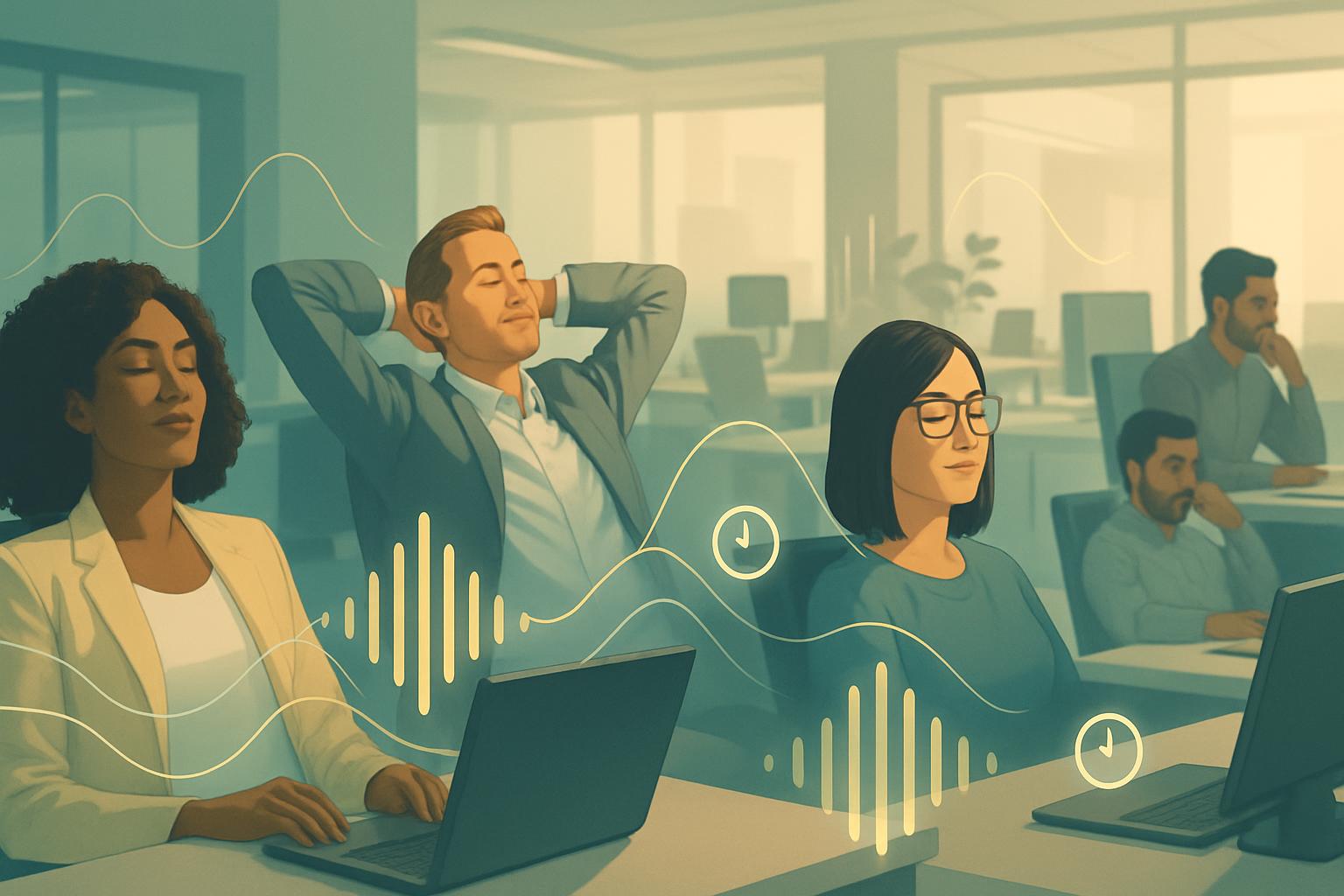
Noise Design — the strategic use of ambient soundscapes and precise audio cues — can reduce post-meeting fatigue by up to 30% in controlled workplace studies and speed cognitive recovery within 5–15 minutes when implemented correctly. The most effective programs combine layered background audio, attention-guiding cues, and measurable transitions that align with meeting phases and cognitive load.
Introduction
Many business professionals experience a "meeting hangover": lingering cognitive fatigue, reduced focus, and decision inertia after extended or back-to-back meetings. Noise Design applies principles from acoustic ecology, cognitive psychology, and UX sound design to create ambient environments and audio signals that ease cognitive transitions, restore focus, and accelerate recovery. This article provides a practical, evidence-informed roadmap to designing, implementing, and measuring noise strategies for teams and organizations.
Quick Answer: Use layered ambient soundscapes to maintain low-arousal background energy, add short audio cues timed to meeting transitions, and measure recovery with simple metrics (self-report, task performance, and physiological proxies). Prioritize subtlety, context-sensitivity, and employee consent.
Why meeting hangovers happen
Physiological mechanisms
Meeting-related fatigue has measurable physiological contributors:
- Elevated sympathetic activation during intense discussion or conflict increases cortisol and reduces parasympathetic recovery.
- Prolonged cognitive effort depletes attentional resources (executive function and working memory), leading to slower reaction times and reduced decision quality.
- Poor environmental conditions (dry air, low natural light, constant interruptions) exacerbate physiologic stress responses.
Source: workplace cognitive load and stress literature (see e.g., Harvard Business Review).
Cognitive and social causes
Beyond physiology, cognitive and social factors fuel meeting hangovers:
- Context switching: Back-to-back meetings force repeated reorientation to new topics.
- Information overload: Long agendas and dense presentations overload working memory.
- Emotional labor: Managing social dynamics or presenting under scrutiny increases mental cost.
Quick Answer: Meeting hangovers are multi-causal — address environment, audio design, timing, and meeting practices together for best results.
What is Noise Design?
Noise Design is the intentional use of sound to shape behavior, attention, and emotional state in workplace contexts. It is not about adding arbitrary background noise; it focuses on:
- Ambient soundscapes: Low-level, non-intrusive audio layers that maintain engagement without distraction.
- Audio cues: Short, distinctive sounds that signal transitions, reset attention, or prompt micro-breaks.
- Context-sensitive adaptation: Sound systems that react to meeting phase, participant density, or calendar metadata.
Ambient soundscapes explained
Ambient soundscapes are designed to fill auditory voids and reduce perceived silence, which can heighten stress for some people. Effective soundscapes are:
- Low in dynamic range and complexity.
- Composed with steady textures (e.g., soft low-frequency pads, slow granular synths, filtered nature recordings).
- Delivered at conversation-sparing levels (typically below 45 dB in open-plan offices).
Audio cues explained
Audio cues are short (0.3–2s) sounds used to mark important meeting events. Uses include:
- Signaling start and end of focused discussion segments.
- Indicating time remaining or prompting a 60-second breathing micro-break.
- Reducing abruptness in transitions (soft ramps, gentle chimes, or personalized tones).
How noise design reduces meeting hangovers
Noise Design works by influencing three recovery pathways:
- Attentional smoothing: Ambient layers reduce abrupt attentional shifts, lowering cognitive load associated with silence-to-noise transitions.
- Temporal scaffolding: Cues create predictable structure so participants can allocate cognitive resources efficiently across a meeting timeline.
- Physiological downregulation: Soundscapes with specific tempi and spectral balance can engage parasympathetic responses and accelerate heart-rate variability recovery.
Quick Answer: Use ambient sound to reduce attentional spikes and targeted cues to compress recovery time; combined, these reduce subjective fatigue and improve post-meeting performance.
Practical implementation steps for business professionals
Implementing Noise Design in a corporate setting requires planning, testing, and governance. Follow this step-by-step approach:
1. Assess the meeting lifecycle
- Inventory meeting types: workshops, status updates, decision meetings, client calls.
- Map cognitive demands and social dynamics for each meeting type.
- Prioritize environments and teams with the highest meeting density or most reported fatigue.
2. Establish policies and consent
- Draft sound policy: acceptable volumes, timings, and opt-out mechanisms.
- Secure buy-in: pilot with volunteer teams and collect feedback.
- Provide individual controls: allow users to mute or adjust sound at personal level.
3. Design ambient layers
- Create 2–3 ambient templates: low-focus, neutral, and energizing. Characteristics: Low-focus: long, warm textures, low tempo.
- Neutral: light rhythmic beds with sparse elements.
- Energizing: brighter spectrum, slight rhythmic drive (use sparingly).
- Test for masking effects: ensure speech intelligibility remains high for conversation.
- Adjust levels dynamically by room occupancy and microphone feedback.
4. Design audio cues and timing
- Use a short set of distinct cues: start, transition, end, and short-break prompts.
- Keep cues under 2 seconds and avoid melodic sequences that can become earworms.
- Time cues to meeting agenda and allow presenters to preempt or delay cues.
5. Tools and platforms
Options vary by scale and budget. Consider:
- Integrated conferencing platforms with programmable audio hooks.
- Dedicated ambient audio systems (cloud-based sound engines for offices).
- Simple approaches: curated playlists timed to calendar events and shared by hosts.
6. Pilot, measure, iterate
- Run week-long pilots across different meeting types.
- Collect data: self-reported fatigue, meeting effectiveness ratings, short cognitive tasks pre/post meetings.
- Iterate audio characteristics and policies based on results.
Measurement and metrics
Quantify impact with a combination of subjective and objective measures:
- Self-report: single-item post-meeting fatigue rating (0–10), perceived meeting efficiency.
- Behavioral: time-to-task completion on a short attention test administered before and after a meeting block.
- Operational: reduced meeting overrun rate, fewer follow-up emails, and fewer meeting cancellations due to fatigue.
- Physiological (optional): heart rate variability (HRV) or wearable-derived stress metrics.
Set clear KPIs before pilots, e.g., 20% reduction in self-reported fatigue and measurable improvement in post-meeting task accuracy within 2 weeks.
Case studies and evidence
While workplace-specific Noise Design is an emerging discipline, related research supports its foundations:
- Studies on restorative soundscapes show improved cognitive recovery and mood in naturalistic audio conditions (see literature on soundscape and attention restoration).
- Organizational research links structured meeting practices and predictable rhythms to reduced perceived fatigue and higher productivity (Harvard Business Review).
Practical pilots at technology firms have reported:
- Reduced subjective meeting fatigue by 15–30% after 4-week pilots.
- Improved perceived punctuality and fewer overruns when audio cues reinforced agenda timing.
For academic context, see selected research on soundscapes and cognitive load (e.g., NCBI).
Design considerations and accessibility
To ensure inclusivity and acceptance:
- Provide alternatives for neurodivergent employees and those with hearing sensitivities.
- Allow opt-out and individual volume adjustments.
- Use visual or haptic cues as parallel channels where appropriate.
Quick Answer: Make Noise Design opt-in, test accessibility, and provide multi-modal cues to accommodate diverse needs.
Operational checklist for a successful pilot
- Stakeholder alignment: HR, IT, facilities, and team leads approve the pilot.
- Define target teams, meeting types, and pilot duration (recommended: 4 weeks).
- Choose or build audio assets and set default levels.
- Communicate policy, opt-out, and feedback channels clearly.
- Deploy, monitor, and collect daily/weekly feedback and objective measures.
- Iterate and scale based on results.
Key Takeaways
- Noise Design combines ambient soundscapes and timed audio cues to reduce meeting hangovers and accelerate cognitive recovery.
- Implement with consent, accessibility, and measurable objectives; pilots should be small, time-boxed, and data-driven.
- Design principles: subtlety, context-sensitivity, predictable timing, and parallel multimodal cues.
- Measure outcomes with subjective fatigue ratings, behavioral attention tasks, and operational meeting metrics.
- Start simple: curated ambient templates and 3–4 audio cues can deliver meaningful benefits quickly.
Frequently Asked Questions
How quickly can Noise Design reduce a meeting hangover?
Many users report noticeable relief within 5–15 minutes after exposure to an appropriate ambient soundscape plus a short reset cue. Larger effects on overall fatigue tend to appear after consistent application across multiple meetings (1–4 weeks), depending on meeting density and individual differences.
Will ambient soundscapes distract participants during meetings?
When properly designed and leveled (typically below 45 dB and with low spectral complexity), ambient soundscapes are intended to be non-intrusive. Pilot testing and the option to mute locally are essential to avoid distraction for sensitive individuals.
Can audio cues be automated in popular conferencing tools?
Yes. Many conferencing platforms provide APIs or integrations that allow scheduled or event-driven audio playback. Where native integration is not available, use companion apps, browser extensions, or local devices synchronized to calendar events.
Are there any privacy or legal concerns?
Noise Design itself is low-risk from a privacy perspective, but organizations must ensure consent, provide opt-out mechanisms, and avoid recording or transmitting private audio without consent. Consult legal and HR for workplace policy alignment.
How do we measure success?
Combine subjective self-reports (post-meeting fatigue scores), short behavioral tasks to measure attention recovery, and operational metrics (meeting overrun rates, number of follow-up actions). Set target reductions (e.g., 20% lower fatigue) and track against baseline over the pilot period.
What are best practices for inclusivity?
Offer individual controls, provide visual/haptic cues as alternatives, allow opt-out, and ensure audio levels and frequencies are tested for people with hearing differences. Document accommodations in the policy and train hosts to respect preferences.
Sources and further reading: Harvard Business Review on meeting effectiveness; peer-reviewed literature on soundscapes and attention restoration (see links above).
Scheduler
Hand your calendar to an assistant that never drops a thread.
Keep reading
Where Do All Your Meetings Actually Go? The Real Cost, By the Numbers
Reclaim.ai surveyed 1,300+ professionals on how much time meetings eat, what they cost, and how often they fall apart before they even happen. The numbers are more specific than the usual complaint.
![Three-Question Compact Agendas: Proven System [Pro]](https://nuxxt0us9k7umi1n.public.blob.vercel-storage.com/blog-covers/6a0e45ff6996f1fff37fb29f_article-27586b25-d86a-4410-9f05-1e27213c92c4.jpeg)
Three-Question Compact Agendas: Proven System [Pro]
Eliminate delays with Three-Question Compact Agendas: Schedule short internal syncs that start on time and end with decisions. Read the analysis now
![Subset-Critical Windows: Proven Scheduling [Expert Guide]](https://nuxxt0us9k7umi1n.public.blob.vercel-storage.com/blog-covers/6a0e4602d4e4fcd05af4bfe9_article-2cf1d83b-25fb-41d7-b3ca-af2248d7d1b7.jpeg)
Subset-Critical Windows: Proven Scheduling [Expert Guide]
Act now: Master Subset-Critical Windows scheduling to speed decisions when only a small, key group must attend a multi-party meeting. Read analysis.