Quantifying Time Debt: Measuring Context‑Switching Costs and
Learn about Time Debt: How to Measure Context‑Switching Costs and Use AI‑Scheduled Recovery Blocks to Pay It Down in this comprehensive SEO guide.
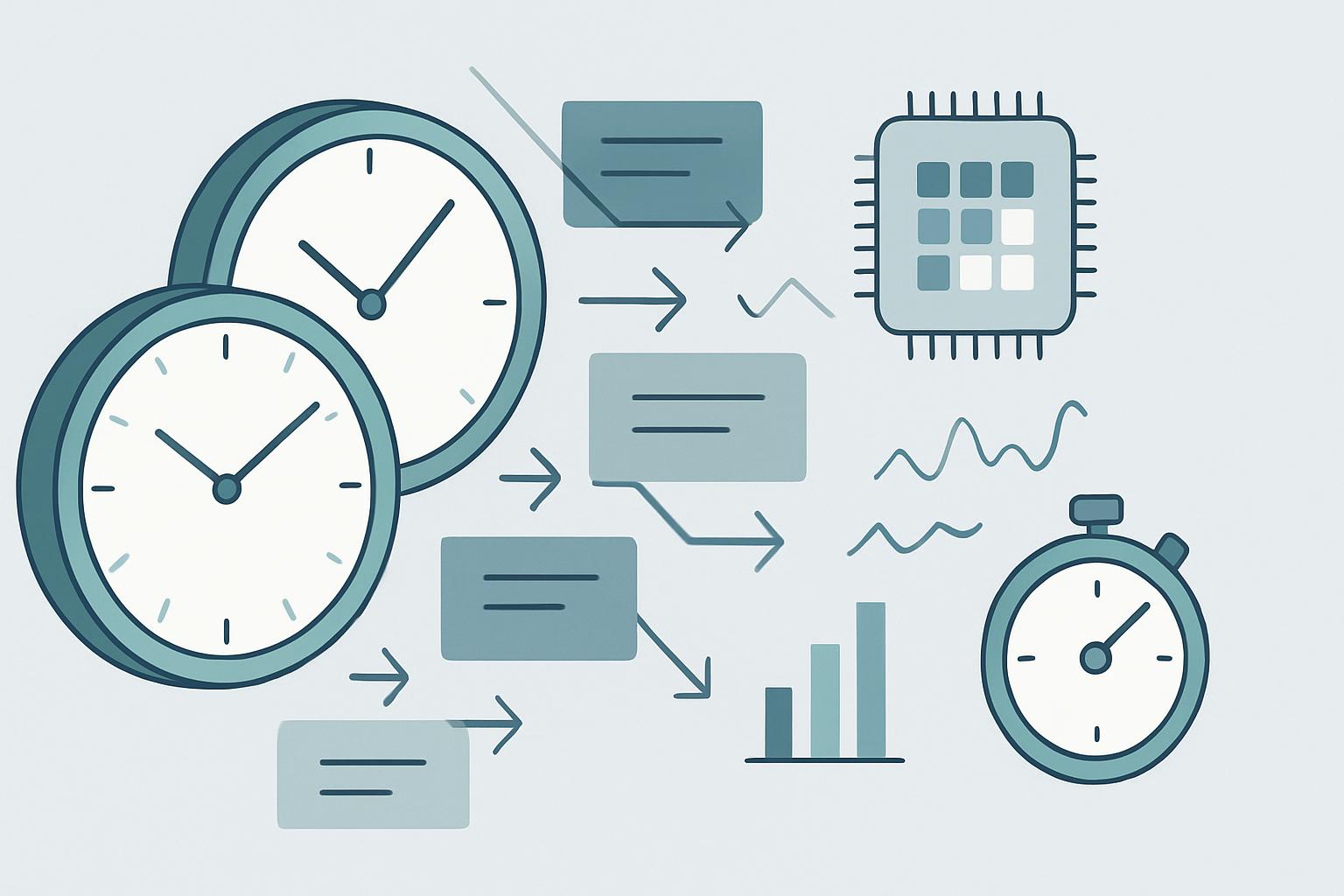
Time debt is the cumulative productivity loss caused by context switching and fragmented focus. Measurable with simple metrics (switch frequency, lost minutes per switch, and recovery multiplier), it commonly consumes 15–40% of knowledge workers' time; AI‑scheduled recovery blocks can reduce that loss by 25–60% when deployed with clear policies and measurement.[1]
Introduction
This article explains how business leaders can measure the cost of context switching—what we term "time debt"—and operationalize AI tools to schedule recovery blocks that pay that debt down. It provides formulas, measurable KPIs, implementation steps, example calculations, and practical governance guidance aimed at executives, product managers, and operations leaders seeking to increase effective work time across teams.
Quick Answer: Measure time debt as: (average switches per day) × (average lost minutes per switch) × (recovery multiplier). Use AI to schedule 20–60 minute focused recovery blocks, batched around natural task boundaries, and track reductions in switch frequency and effective throughput.
Why Time Debt Matters
What is Time Debt?
Time debt is the accumulated opportunity cost from interruptions, context switches, and fragmented attention that reduces productive output. Like financial debt, it compounds: small inefficiencies and interruptions add up and create ongoing drag on team momentum and well‑being.
How Context‑Switching Creates Time Debt
- Switch overhead: Each switch costs not only the interruption itself, but also recovery time to reorient and regain deep focus.
- Fragmentation: Tasks spread across many short intervals increase cognitive load and reduce throughput per hour.
- Quality and error risk: Frequent switching increases mistakes, rework, and longer review cycles.
Research shows interruption costs are substantial for knowledge workers; studies from cognitive science and information systems quantify measurable drops in efficiency when work is fragmented.[1]
Measuring Context‑Switching Costs
Metrics and Formulas
To operationalize measurement, use these primary metrics:
- Switch Frequency (S): average number of context switches per person per workday.
- Loss per Switch (L): average minutes lost per switch (interruption + recovery).
- Recovery Multiplier (R): factor capturing non‑linear effects (e.g., 1.0 = linear, 1.5 = 50% more lost time due to deeper task complexity).
Core formula:
Time Debt (minutes/day) = S × L × R
Extend to team and period:
Team Time Debt (hours/week) = (S × L × R × team_size × workdays_per_week) / 60
Data Sources & Collection
Collect data from multiple sources to validate estimates:
- Calendar analytics: number and density of meetings, meeting start/stop variance, and gaps between events.
- Digital activity logs: window focus events, app switches, and notification bursts from collaboration platforms.
- Self‑reports and time diaries: short daily prompts where employees log switches and subjective recovery time for a representative week.
- Sensor and device telemetry (optional): keyboard/mouse activity, active/inactive time.
Combine objective telemetry with lightweight surveys to create calibrated L (loss per switch) values for your team.
Example Calculation
Scenario: A product team of 10 where each person averages 18 switches/day, L = 7 minutes per switch, R = 1.2.
- Individual Time Debt = 18 × 7 × 1.2 = 151.2 minutes/day ≈ 2.52 hours/day.
- Team Time Debt = 2.52 × 10 = 25.2 hours/day. Over a 5‑day week = 126 hours/week.
Interpretation: Without intervention, the team loses the equivalent of more than three full working weeks per month to context switching. Even incremental reductions will yield measurable capacity increases.
Quick Answer: Use simple telemetry and a short time‑use survey to estimate S and L. Multiply by a recovery multiplier for complexity to calculate daily and weekly time debt.
AI‑Scheduled Recovery Blocks
What They Are
AI‑scheduled recovery blocks are short to medium blocks of uninterrupted time automatically allocated in calendars by an AI agent to allow recovery and deep work after a period of interruptions or scheduled short tasks. They differ from arbitrary "do not disturb" slots by being dynamically scheduled around actual behavior and business priorities.
How AI Schedules Recovery Blocks
Key functions of an AI scheduler:
- Detect switch patterns and notification spikes from telemetry or calendar events.
- Determine optimal block length based on recent history and task profiles (typically 20–90 minutes).
- Find windows that minimize conflict with core meetings and cross‑functional dependencies.
- Propose blocks to the individual and optionally auto‑book with transparent rules and opt‑out controls.
Algorithmic considerations:
- Prioritize natural task boundaries (end of meeting, completion of short tasks).
- Use reinforcement learning or heuristics to adapt block length and timing per user feedback.
- Integrate with organizational policies for core hours and team synchronization.
Evidence suggests structured focus time, when consistently protected, significantly reduces the need for repeated reorientation.[2]
Implementation Steps
- Baseline measurement: run a 2‑week telemetry + diary pilot to compute S, L, and R.
- Define policy guardrails: acceptable auto‑book windows, minimum block lengths, and opt‑out rules.
- Deploy an AI scheduler in pilot mode (suggestions only) for 4–6 weeks and collect acceptance rates and outcomes.
- Iterate: adjust heuristics for block length, timing, and team patterns; incorporate manager approvals if required.
- Scale with dashboards: show reductions in S and L, increases in uninterrupted deep time, and downstream KPIs such as cycle time and quality metrics.
Operationalizing in Teams
Policy, Tooling, and Reporting
To make AI‑scheduled recovery blocks effective at scale, create a simple operational framework:
- Policy: Clear expectations for core hours, acceptable interruptions, and how recovery blocks are treated.
- Tooling: Calendar integrations, notification routing (e.g., channel filters), and simple user controls for preferences.
- Reporting: Weekly dashboards summarizing time debt, acceptance rate of blocks, change in cycle times, and satisfaction metrics.
Governance tips:
- Protect autonomy—allow individuals to accept, modify, or decline blocks.
- Measure impact on cross‑team dependencies and adjust team cadences if recovery blocks cause coordination friction.
- Promote behavioral norms for meetings (clear agendas, start/stop on time, no‑meeting days).
ROI and KPIs
Key performance indicators to track:
- Reduction in Switch Frequency (ΔS)
- Reduction in Loss per Switch (ΔL)
- Increase in Weekly Deep Work Hours
- Downstream KPIs: cycle time, throughput, defects, and employee satisfaction
Simple ROI model:
- Estimate recovered hours/week = baseline team time debt − post‑intervention time debt.
- Multiply by average hourly cost (fully loaded) to estimate monthly savings.
- Compare savings to implementation cost (software, engineering, and change management).
Case benchmarks: Organizations commonly report recoveries of 2–8 hours per person per week after process and tooling changes; AI scheduling can amplify this when combined with policy and incentives. See cognitive interruption literature for baseline impact estimates.[1]
Key Takeaways
- Time debt quantifies the productivity loss from context switching and can be measured with simple metrics (S, L, R).
- Short, AI‑scheduled recovery blocks—when aligned with task boundaries—reduce reorientation time and increase deep work.
- Start with measurement: telemetry + self‑reporting gives defensible baseline numbers for decision making.
- Governance and user autonomy are critical: allow opt‑outs, transparent suggestions, and manager alignment.
- Track ROI using recovered hours and link to operational KPIs such as cycle time and quality.
Frequently Asked Questions
How quickly can we expect to see reductions in time debt after deploying AI scheduling?
Teams often see measurable reductions within 4–8 weeks: acceptance of suggested blocks accelerates adaptation, and changes in meeting behavior amplify benefits. Expect incremental improvements rather than overnight change.
What is a recommended minimum recovery block length?
Start with 30–45 minutes. Shorter blocks (20 minutes) can help for micro‑tasks; longer blocks (>60 minutes) are useful for complex deep work. Let AI adapt lengths based on user feedback and measured recovery effectiveness.
How do we measure loss per switch (L) accurately?
Combine objective telemetry (app switches, calendar gaps) with short post‑day surveys asking users to estimate recovery time. Use a sample week and compute median values to reduce bias.
Will auto‑booking recovery blocks interfere with necessary collaboration?
Not if implemented with policy guardrails: prioritize core collaboration windows, allow user overrides, and let teams set synchronized windows. AI should consider dependencies when proposing blocks.
Are there privacy concerns with collecting activity telemetry?
Yes. Use aggregated, anonymized metrics where possible, get explicit consent, and be transparent about the data purpose. Focus on behavioral patterns and high‑level metrics rather than keystroke or content monitoring.
Which teams benefit most from this approach?
Knowledge‑intensive teams with high interruption rates—product, engineering, design, and analytics—tend to benefit most. Teams with tightly coupled, synchronous workflows require more careful coordination.
What tools support AI scheduling today?
Several calendar and productivity platforms provide APIs to enable AI scheduling; custom integrations with calendar providers and collaboration tools often yield the best outcomes when combined with governance and reporting layers. Evaluate vendors for privacy, adaptability, and calendar ecosystem support.
Sources
Selected references and foundational research:
- Gloria Mark, research on interruptions and cost of fragmented attention. https://www.ics.uci.edu/~gmark/ [1]
- Analysis and commentary on AI and productivity from industry research. https://www.mckinsey.com/ [2]
- General cognitive science and workplace well‑being resources from the American Psychological Association. https://www.apa.org/ [3]
Scheduler
Hand your calendar to an assistant that never drops a thread.
Keep reading

The Science of the Meeting Buffer: What Brain Research Says About Back-to-Back Calls
Microsoft wired 14 people with EEG caps to test back-to-back meetings versus meetings with breaks. The stress data was specific enough that Microsoft changed how Outlook works.

Low-Prep External Intros: Proven Scheduling Frameworks Now
Cut Low-Prep External Intros: Scheduling Frameworks That Minimize Prep and Back-and-Forth for Brief Vendor and Prospect Calls. Read the expert analysis
Multi-Location Site Visit Scheduling: Proven Playbook
Optimize Multi-Location Site Visit Scheduling—visit 4–6 nearby offices/day with route optimization, timeboxing, and buffers. Get the full breakdown