Reduce No-Shows with Micro-Commitment RSVP Tactics: Practica
Learn about Micro-Commitment RSVP Tactics: Using Tiny Confirmation Steps (Acknowledgement, Quick Prep Checklists) to Cut No-Shows and Improve Attendance Quality in this comprehensive SEO guide.
Introduction
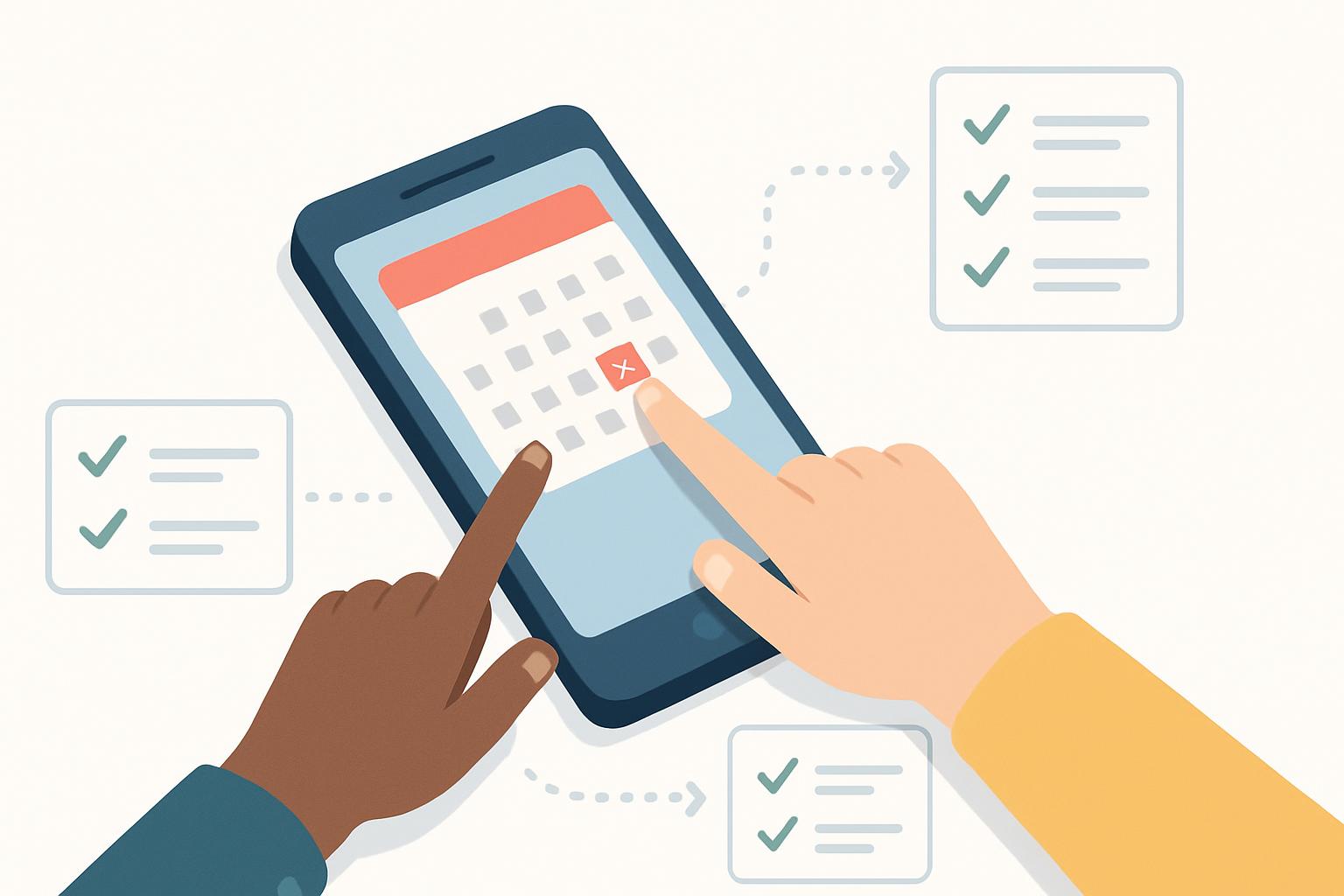
Business professionals who organize meetings, workshops, sales demos, or webinars routinely face two related problems: no-shows and low-quality attendance. Both waste time, reduce revenue opportunities, and harm team morale. This article explains how to deploy micro-commitment RSVP tactics—tiny confirmation steps such as acknowledgements and quick prep checklists—to cut no-shows and improve attendance quality. It offers a practical framework, templates, measurement guidance, and common pitfalls to avoid.
What are Micro-Commitment RSVP Tactics?
Definition and core concept
Micro-commitment RSVP tactics break confirmation and preparation into very small steps that are easy for invitees to complete. Rather than asking for a one-time, high-effort commitment, you ask for a sequence of tiny confirmations that together create a stronger psychological commitment to attend and participate. Each small step reinforces the previous one and increases the likelihood the person will show up on time and be prepared.
Types of micro-commitments used in RSVP flows
- Acknowledgement taps immediate acceptance: a click or short reply confirming receipt of the invite.
- Quick prep checklists ask for one- to three-item readiness confirmations (e.g., "Confirm you can access the meeting link").
- Micro-surveys or intent nudges capture attendee expectations (e.g., "What is one question you want answered?").
- Time-block reconfirmations ask attendees to click a simple "Yes/No" 24 hours before.
Why Micro-Commitments Reduce No-Shows
Psychological principles at work
Micro-commitments leverage proven behavioral science principles:
- Consistency: small acts of commitment make people more likely to behave consistently with that act (Cialdini's principle of commitment and consistency).
- Loss aversion and sunk cost: each tiny action increases perceived investment, raising the cost of not attending.
- Attention anchoring: multiple reminders direct cognitive attention to the event.
- Implementation intentions: quick prep tasks encourage people to form concrete plans ("I will join at 10:00 and I will have X ready").
Empirical evidence and benchmarks
While results vary by industry and audience, aggregated studies and practitioner reports suggest:
- Single reminder messages reduce no-shows by 8–12% (healthcare and appointments research).
- Multi-step confirmation sequences and brief engagement tasks reduce no-shows by 20–40% in events and sales demos (case studies from SaaS and corporate training teams).
- Asking attendees to perform a 30–60 second prep task increases participation quality (measured by questions asked, time spent active, or survey-rated value) by 10–25%.
(Sources: behavioral science literature and practitioner case studies; see sources section.)
Core Tactics and Templates
Acknowledgement: immediate micro-commitment
Send an automatic acknowledgement immediately after RSVP or calendar invite acceptance. Keep it brief and ask for a one-click confirmation. Example elements:
- Thank you line — acknowledge their action.
- One-click confirmation button or quick reply (e.g., "Confirm I’ll attend").
- Optional 1-line action: save the event to your calendar or copy meeting link.
Template: "Thanks for registering. Please click 'Confirm' to save your spot and receive event notes. Reply 'Yes' if you’d like a calendar invite."
Quick prep checklist: 48–72 hours before
Send a short checklist that requires 30–60 seconds to complete. The checklist serves two purposes: reduces friction at start time and reinforces commitment. Example items:
- Confirm you received the meeting link.
- Identify one goal or question you want answered.
- Verify required materials or access (e.g., software, files).
Template: "Quick prep (30 sec): 1) Click the link to test access. 2) Reply with the one question you want answered. 3) Confirm you have X installed."
Reconfirmation and light prompts: 24 hours and 1 hour before
The final micro-asks should be frictionless: a one-click reconfirmation or a single-line SMS/notification. They remind attendees of time, place, and what they committed to.
Template: "See you tomorrow at 10:00. Tap 'I'm in' to confirm. If plans changed, reply 'Cancel' to free your spot."
Engagement micro-tasks during registration
At sign-up, ask one low-effort question that signals intent and creates a plan: "What is the one thing you want to learn?" This produces an implementation intention and provides personalization data for the host.
Implementation Plan: Step-by-Step
1. Design your three-step flow
- Immediate acknowledgement after RSVP/registration with one-click confirm.
- Quick prep checklist 48–72 hours prior that requires a short action.
- Final reconfirmation 24 hours and optionally 1 hour before the event.
Keep each step to one action and under 30–60 seconds to complete.
2. Choose channels and tools
Pick a combination of email, SMS, in-app notifications, calendar events, and chat messages depending on audience preferences. Automate sequences with your CRM, calendar platform, or workflow automation tool to ensure consistent timing.
3. Craft micro-copy and CTAs
Micro-copy must be direct and action-oriented. Use verbs, timing, and consequence language (e.g., "Confirm in 1 click", "Quick prep: 30 sec"). Test alternative CTAs ("I'm in" vs "Confirm") for conversion uplift.
4. Segment and personalize
Segment registrants by role, region, or expected participation level and personalize the quick prep item accordingly. Personalized micro-commitments boost follow-through.
5. Train staff and standardize handling
Ensure hosts know how to read the prep responses and use them in the session. Create a short host checklist that matches the attendee checklist so expectations align.
Sign up for our newsletter
Get the latest updates, product launches, and helpful tips delivered straight to your inbox.
Measuring and Improving Attendance Quality
Metrics to track
- No-show rate (primary KPI): percentage of registrants who do not attend.
- Reconfirmation conversion: percent who click the reconfirm button.
- Preparedness rate: percent who complete the quick prep checklist.
- Engagement quality: time active, number of questions asked, post-event satisfaction score.
A/B testing design
Run controlled tests to isolate impact:
- Split registrants into control (standard reminders) and treatment (micro-commitment sequence).
- Keep sample sizes adequate and run for multiple events or sufficient participants.
- Measure both short-term (attendance) and downstream (engagement quality) outcomes.
Reporting cadence and insights
Report weekly during rollout and monthly thereafter. Watch for leading indicators such as reconfirmation rates and prep completion. If reconfirmation is high but attendance remains low, investigate logistical or content issues rather than the micro-commitment flow.
Common Pitfalls and How to Avoid Them
Over-communication and alert fatigue
Too many messages cause unsubscribe or opt-out. Limit micro-asks to critical moments (immediate, 48–72h, 24h, optionally 1h) and combine prompts when possible. Respect channel preferences (email or SMS only if consented).
Creating friction instead of reducing it
If micro-asks require too much effort (long forms or multiple steps), they backfire. Keep each task to 1–3 items and under 60 seconds. Provide clear one-click options and pre-filled answers where feasible.
Failure to act on responses
If attendees complete the prep checklist but hosts ignore their inputs, trust erodes. Ensure host workflows include reviewing prep submissions and tailoring the session accordingly.
Key Takeaways
- Micro-commitment RSVP tactics use small, low-friction actions to reinforce intent and improve attendance quality.
- Implement a 3-step flow: immediate acknowledgement, quick prep checklist (48–72 hours), and reconfirmation (24 hours, optional 1 hour).
- Keep each micro-ask under 60 seconds and one simple action (click, reply, quick checklist).
- Measure no-shows, reconfirmation rates, preparedness, and engagement quality; A/B test to validate impact.
- Avoid over-communication, high-friction tasks, and ignoring attendee inputs.
Frequently Asked Questions
How long should a micro-commitment interaction take?
Keep each interaction under 30–60 seconds. The goal is minimal friction—one click or a one-question response—so that attendees can complete it immediately without scheduling additional time.
Which channel works best for micro-commitments: email, SMS, or in-app?
Channel effectiveness depends on your audience. SMS typically yields higher open and response rates but requires consent and may cost more. Email is broadly acceptable for professional audiences; in-app notifications work well if users are actively engaged with your product. Use audience data to prioritize channels and respect preferences.
How many reminders are too many?
Limit reminders to the critical micro-ask points: immediate acknowledgement, one prep touch 48–72 hours before, and one reconfirmation 24 hours prior (optional 1-hour nudge for high-value events). More frequent messaging increases opt-out risk.
What should we ask in a quick prep checklist?
Include 1–3 items that directly reduce friction at event start: confirm access to the meeting link, state one goal or question, and verify required tools or files. Tailor items to the event type and audience role.
How do we measure whether micro-commitments actually improved attendance quality?
Track no-show rate, reconfirmation completion, and preparedness completion. For quality, measure session engagement (time active, questions asked), conversion outcomes for sales demos, and post-event satisfaction scores. Use A/B testing to attribute changes to the micro-commitment flow.
Are there compliance or privacy concerns with micro-commitments?
Yes. Obtain consent for SMS or push notifications and respect data privacy regulations (e.g., GDPR for EU attendees). Store responses securely and use them only for the stated event purposes. Keep micro-asks transparent and opt-in.
Sources and Further Reading
Key principles referenced in this article derive from behavioral science literature and practitioner case studies. Notable sources include academic research on commitment and consistency, implementation intention studies, and industry reports on reminder efficacy. For practical benchmarks and case studies, consult organizational behavior and event success literature (e.g., behavioral science texts and industry white papers).
Implementing micro-commitment RSVP tactics requires minimal investment in copy and automation but can yield rapid reductions in no-shows and measurable improvements in attendance quality. Use the templates and measurement guidance above to pilot a flow, track key metrics, and iterate based on your audience's response.
Sign up for our newsletter
Get the latest updates, product launches, and helpful tips delivered straight to your inbox.
Scheduler
Hand your calendar to an assistant that never drops a thread.
Keep reading
Where Do All Your Meetings Actually Go? The Real Cost, By the Numbers
Reclaim.ai surveyed 1,300+ professionals on how much time meetings eat, what they cost, and how often they fall apart before they even happen. The numbers are more specific than the usual complaint.
![Three-Question Compact Agendas: Proven System [Pro]](https://nuxxt0us9k7umi1n.public.blob.vercel-storage.com/blog-covers/6a0e45ff6996f1fff37fb29f_article-27586b25-d86a-4410-9f05-1e27213c92c4.jpeg)
Three-Question Compact Agendas: Proven System [Pro]
Eliminate delays with Three-Question Compact Agendas: Schedule short internal syncs that start on time and end with decisions. Read the analysis now
![Subset-Critical Windows: Proven Scheduling [Expert Guide]](https://nuxxt0us9k7umi1n.public.blob.vercel-storage.com/blog-covers/6a0e4602d4e4fcd05af4bfe9_article-2cf1d83b-25fb-41d7-b3ca-af2248d7d1b7.jpeg)
Subset-Critical Windows: Proven Scheduling [Expert Guide]
Act now: Master Subset-Critical Windows scheduling to speed decisions when only a small, key group must attend a multi-party meeting. Read analysis.