When the Person Who Built Your AI Agent Leaves, the Agent Keeps Working
Delinea surveyed 1,000 finance and finance-tech leaders: 28% of companies using AI in critical apps had an agent keep running after the person who deployed it left. Here's why agents need owners, not just logins.
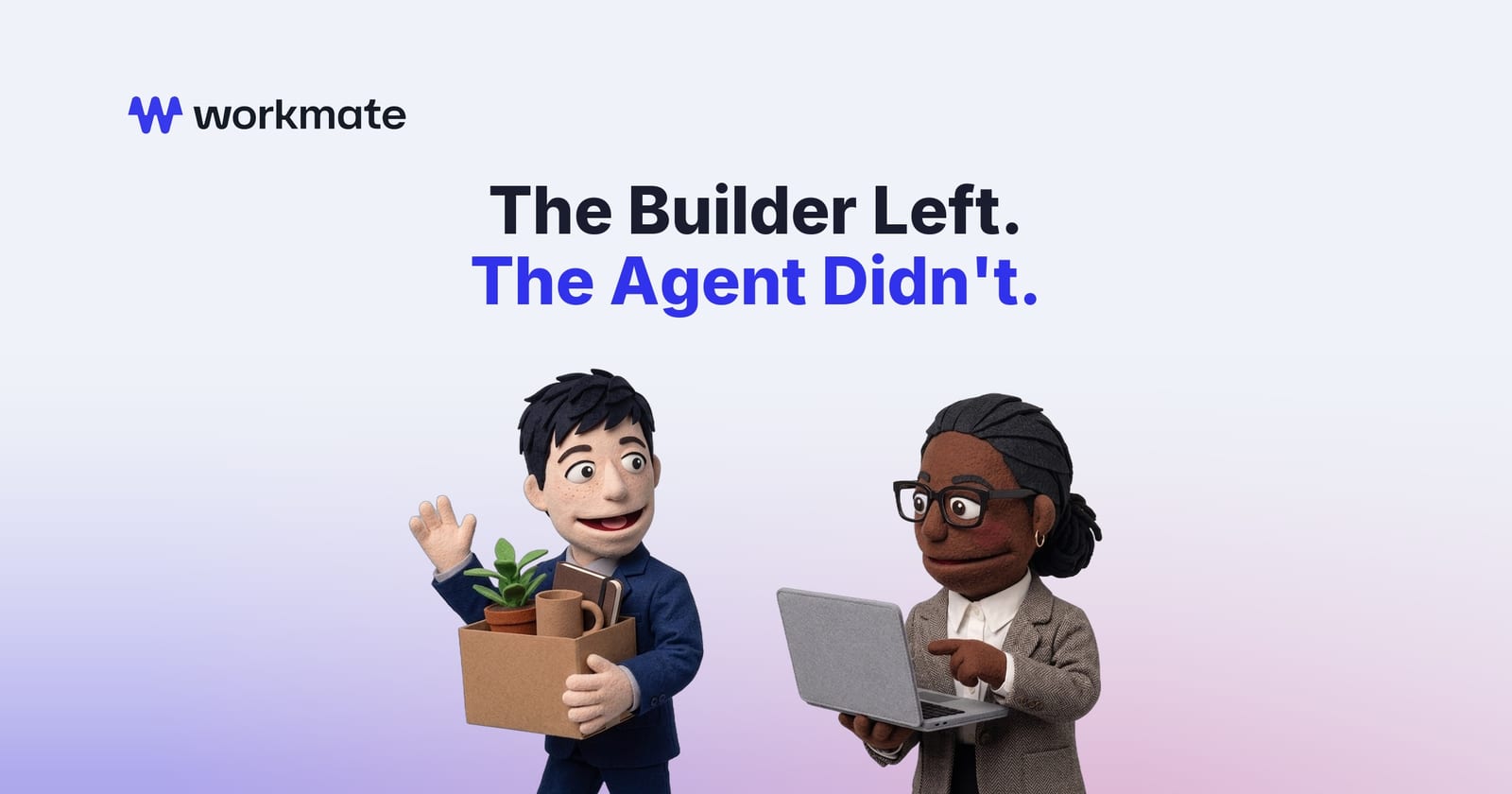
Every company has a version of this story. Someone leaves, and months later IT finds their account still switched on. Now there's a new version. The person leaves, and the AI agent they set up keeps working.
That isn't hypothetical. In Delinea's 2026 Application Access Governance Report, 28% of organizations using AI tools or agents in critical business applications said an agent continued operating after the person who deployed it left. The survey covered 1,000 senior finance and finance-technology leaders in the US and UK, fielded September 8-16, 2026.
A quick caveat before the numbers: Delinea sells access-governance software, so it has a stake in the problem. The findings still line up with what other recent surveys keep showing. AI agents are moving into real systems faster than anyone is assigning them owners.
What the survey found
Agents are no longer just reading data. Among all 1,000 respondents, 88% use AI tools or agents inside critical business applications like ERP, CRM, and HR systems. Most (53%) use them for analysis or recommendations. But 35% have deployed agents that actually take actions.
Those actions are already causing problems. Among the 879 organizations using AI in critical apps, 84% reported at least one AI-related issue in the past 12 months. Only 16% said nothing had gone wrong. The most common issues:
- 32%: actions that couldn't be traced or explained during a review
- 30%: an incorrect financial transaction caused by AI activity
- 28%: AI created a segregation-of-duties conflict
- 28%: an agent kept operating after the person who deployed it left
- 28%: an unintended or unauthorized action
- 26%: an agent accessed data it shouldn't have had
And the gap is widening. 44% say AI deployment is outpacing their governance and security controls. Only 11% say the two are keeping pace.
Why orphaned agents happen
Think about how most agents get built today. A finance analyst sets one up to reconcile vendor statements. It runs under their login, or a shared service account, with whatever access that account already had. It works, so nobody touches it.
Then the analyst takes a new job. Their laptop gets wiped and their email gets forwarded. But the agent was never on the offboarding checklist, because nobody wrote it down as a "thing" with its own identity. So it keeps reconciling, approving, or updating records with nobody watching.
Delinea's report says this is the same old access problem with a new kind of user. It notes that agents "may use permissions inherited from user accounts or shared accounts," and that those permissions should be checked against the agent's actual task, not assumed to be fine because the account was approved once. The human version is already common. In the same survey, 29% said former employees or contractors kept access after leaving, and 33% said people kept access from a previous role. Agents just make the problem quieter.
"IT owns it" isn't the same as an owner
Ask who is accountable for an agent's access and most companies don't have a clean answer. Only 22% of respondents have a single named owner for each application, tracked in one system of record. The most common setup (38%) is that IT owns access governance by default, and business owners have limited visibility into who can do what.
That matters more for agents than for people. A person who approves the wrong payment notices eventually. An agent repeats the same mistake every time it runs. Delinea also found that 25% of respondents name AI agents and copilots among the user types hardest to govern for privileged access. That puts agents just behind IT admins (31%) and third-party workers (28%), and level with business super users (24%).
Sign up for our newsletter
Get the latest updates, product launches, and helpful tips delivered straight to your inbox.
Confidence isn't the same as control
The most uncomfortable number in the report isn't about AI at all. 95% of respondents are confident their access controls would pass an external audit today. Yet 51% report access findings that keep coming back year after year, or that have stayed open for three years or more.
If that gap exists for human access, which companies have managed for decades, it will be wider for agents. Many of them were set up in the last 12 months by whoever needed one.
Five questions to answer for every agent
You don't need a new governance program to start. You need a short list, and someone willing to fill it in. For every agent that can change data or move money:
- Who owns it? One named person, not "the finance team." When that person changes roles, ownership moves on purpose.
- What can it touch? List the systems and the specific permissions. If the answer is "whatever the analyst's login could do," that's the first fix.
- What needs a human yes? Payments, permission changes, and anything that touches regulated data should stop for approval. Delinea's report recommends matching human oversight to "the consequences of the action."
- Can you replay what it did? If an auditor asks why a record changed, you should be able to show the agent's steps, not guess.
- What happens at offboarding? Add agents to the leaver checklist. If the owner leaves and nobody claims the agent, it gets paused, not left running.
Where Workmate fits
This is the reason Workmate treats every agent as its own teammate rather than a script hiding under someone's login. Each Workmate has its own separate computer and private file storage. Admins control which apps it can reach and which skills it can install. And credentials live in a vault that can require a human to approve before they're used. When a person moves on, the agent's access doesn't quietly travel with them. It stays visible and owned, and it can be switched off from one place.
What this means going forward
The first wave of AI rollouts was about whether agents could do the work. The next one is about whether you can say, at any moment, which agents are running, what they can touch, and who answers for them. Only 11% of finance leaders in this survey say their controls are keeping up. Closing that gap mostly means writing things down: an owner, a permission list, and an approval rule for each agent, before the person who built it updates their LinkedIn.
Sign up for our newsletter
Get the latest updates, product launches, and helpful tips delivered straight to your inbox.
Workmate
See what an agent team would do for your business.
Keep reading
AI Made People Faster, Not Teams Better: 69% of AI Work Happens in Private
Miro's study of 9,500+ workers finds 83% say AI made individuals more productive, but only 56% see better quality, and 69% say most AI work happens in private sessions. Why team results lag, and how to make AI a shared workflow.
KPMG's AI Pulse: Governance Confidence Jumped. Built-In Agent Controls Fell.
In KPMG's Q3 2026 survey, 73% of large-company leaders now say they can govern AI at scale, up from 57%. Multi-agent projects jumped from 6% to 25%. But fewer companies are building controls into their agents. Here's why that matters.

How OpenAI Got Its Lawyers and Recruiters Using AI Agents in Five Months
A new working paper tracks how agent use inside OpenAI spread from engineers to legal and recruiting, from near zero in January to nearly 90% by June. The lesson for everyone else isn't the tool. It's the training, feedback and shared workflows around it.