AI Agents for Warehouse and Fulfillment Operations: Inside MHI and Deloitte's 2026 Supply Chain Report
71% of supply chain leaders say AI is already disrupting their operations, and the report predicts 88% adoption within five years, per MHI and Deloitte's 2026 Annual Industry Report. Here's where warehouse and fulfillment agents are actually landing.
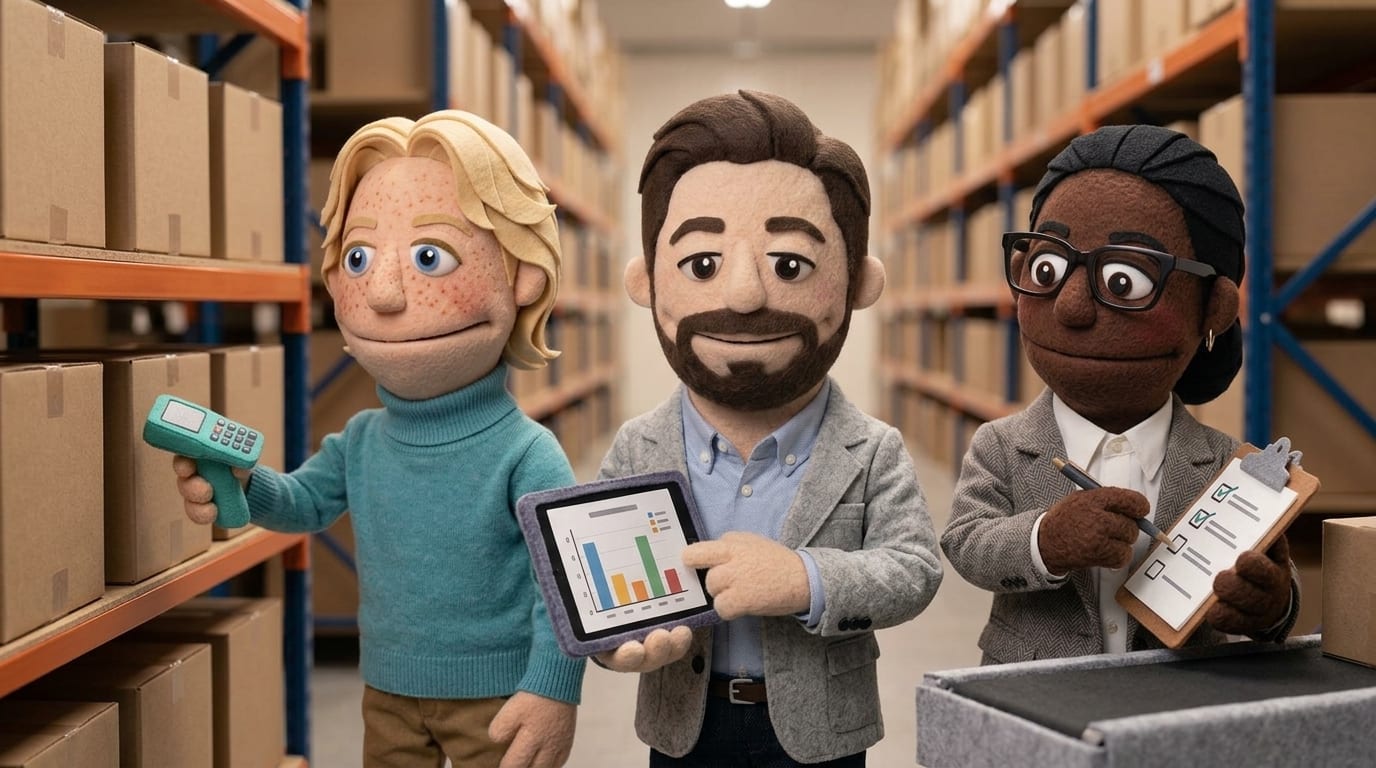
Supply chain leaders have spent a decade calling various technologies "transformational." This year's industry survey shows that word finally lining up with the actual numbers — and warehouse and fulfillment floors are where a lot of that disruption is landing first.
AI Is Now the Single Biggest Disruptor Supply Chains Expect
MHI and Deloitte released the 2026 Annual Industry Report, "Rewiring the Future: A Supply Chain Playbook for Innovation," on April 15, 2026, based on a survey of more than 500 manufacturing and supply chain leaders fielded at the end of 2025. The respondent base skews senior and substantial: 61% hold executive-level titles, 56% of participating companies report annual sales over $50 million, and 18% report $1 billion or more.
The result: 71% of respondents say AI is disrupting their supply chains, with 24% calling the disruption transformational and nearly half (48%) rating its impact as significant or greater — up 25 percentage points since last year's survey. Robotics and automation came in second as the most disruptive technology, with 39% rating its impact significant or greater, up 16 points. As MHI CEO John Paxton put it: "Supply chains can no longer be optimized at the edges. They must be rewired end-to-end. Only connected, intelligent, and automated real-time networks will withstand the volatility and meet the future customer demands for speed and efficiency."
Spending Is Following the Disruption, Not Just the Hype
This isn't just sentiment — the budgets are moving too. 56% of organizations surveyed expect to increase spending on supply chain innovation in the year ahead, 52% say they plan to spend over $1 million, and 17% plan to spend over $10 million. The report frames this as a more disciplined round of investment than prior cycles, with companies stepping back to confirm the specific problem they're solving before committing capital.
Looking out five years, the report predicts adoption of AI will reach 88% among the eight technology categories it tracks — ahead of advanced analytics (86%), cloud computing and storage (85%), IoT and sensors (77%), robotics and automation (73%), wearable and mobile technology (69%), autonomous vehicles and drones (50%), and humanoid robotics (32%).
Where It's Actually Landing: Inventory, Demand Planning, and the E-Commerce Squeeze
The report is specific about where the value is showing up today: "AI is already adding value in a wide range of supply chain processes, from inventory management to demand planning to logistics." On the agentic side specifically, it points to the technology's potential to "quickly eliminate high volume repetitive tasks, proactively address disruptions, enhance forecasting precision, and improve overall visibility within the supply chain."
E-commerce growth is named as one of the report's top ten trends shaping 2026 supply chains, and the warehouse-floor implication is concrete: same-day and next-day delivery expectations are pushing operators toward micro-fulfillment and last-mile innovation, and "warehouses and DCs are deploying robotic picking systems, automated sorters, and conveyor systems to improve performance" while keeping inventory synchronized across stores, warehouses, and online platforms in real time. Deloitte Consulting's Wanda Johnson, Supply Chain Technology Fellow, tied the pieces together: "Those who connect operational excellence, AI-driven orchestration, and workforce readiness into a single playbook will not just withstand disruption; they will convert it into sustained performance and growth."
The Barrier Isn't Belief, It's Knowing Where to Start
The honest part of the report is where it says the enthusiasm stalls. Leaders are excited about AI's potential, but the survey finds they're "getting stuck on where to start and what it takes to scale." The named barriers are practical, not philosophical: unclear use cases paired with automation cost, difficulty building a business case, talent shortages, and budget constraints. The report also flags workforce and talent shortage as the #2 trend affecting supply chains overall this year, as Baby Boomer retirements collide with the reskilling that new automation demands.
The report's own framing for 2026 is that fulfillment operations are becoming "software-defined, perpetually adaptive, and backed by intelligent orchestration engines." Getting there in practice looks less like a single sweeping rollout and more like picking one governed workflow — inventory exceptions, demand forecasting, pick-path optimization — and proving it out before scaling further, which is exactly the sequencing the barriers above are pointing toward.
Workmate
See what an agent team would do for your business.
Keep reading
AI Agents for Construction Companies: Why Bid Estimating Became the First Place Automation Landed
AGC's own 2026 outlook survey says a majority of contractors are boosting AI investment this year. Bluebeam's own data shows why: a 3% miss on a $20 million estimate can wipe out the entire profit margin. Here's where agents actually went to work first.
AI Agents for Equipment Rental Companies: Inside United Rentals' Push to Put an AI Agent in Every Customer's Pocket
United Rentals says its new Equipment Agent delivers a 70% improvement in customers finding the right machine, and it just became the first equipment rental app inside the ChatGPT store. Here's what that signals for an $83.5 billion industry still built on counter staff and catalogs.
AI Agents for Grocery Store Chains: Why the Real Automation Fight Is at the Self-Checkout Lane
68% of U.S. food retailers now use AI, up from 47% a year ago, per FMI's own 2026 industry survey. But the sharpest near-term AI fight in grocery isn't in the supply chain, it's at the self-checkout lane, where shoplifting, false alarms, and employee abuse are colliding.