What Will a PE Buyer Ask About Your AI in Due Diligence?
Buyers now ask what AI you use, what data it touches, who can access it, whether people review its decisions and whether it's in the value-creation plan. A checklist for portfolio-company CEOs and CFOs preparing for a sale, drawn from law firm, RSM and A&M guidance.
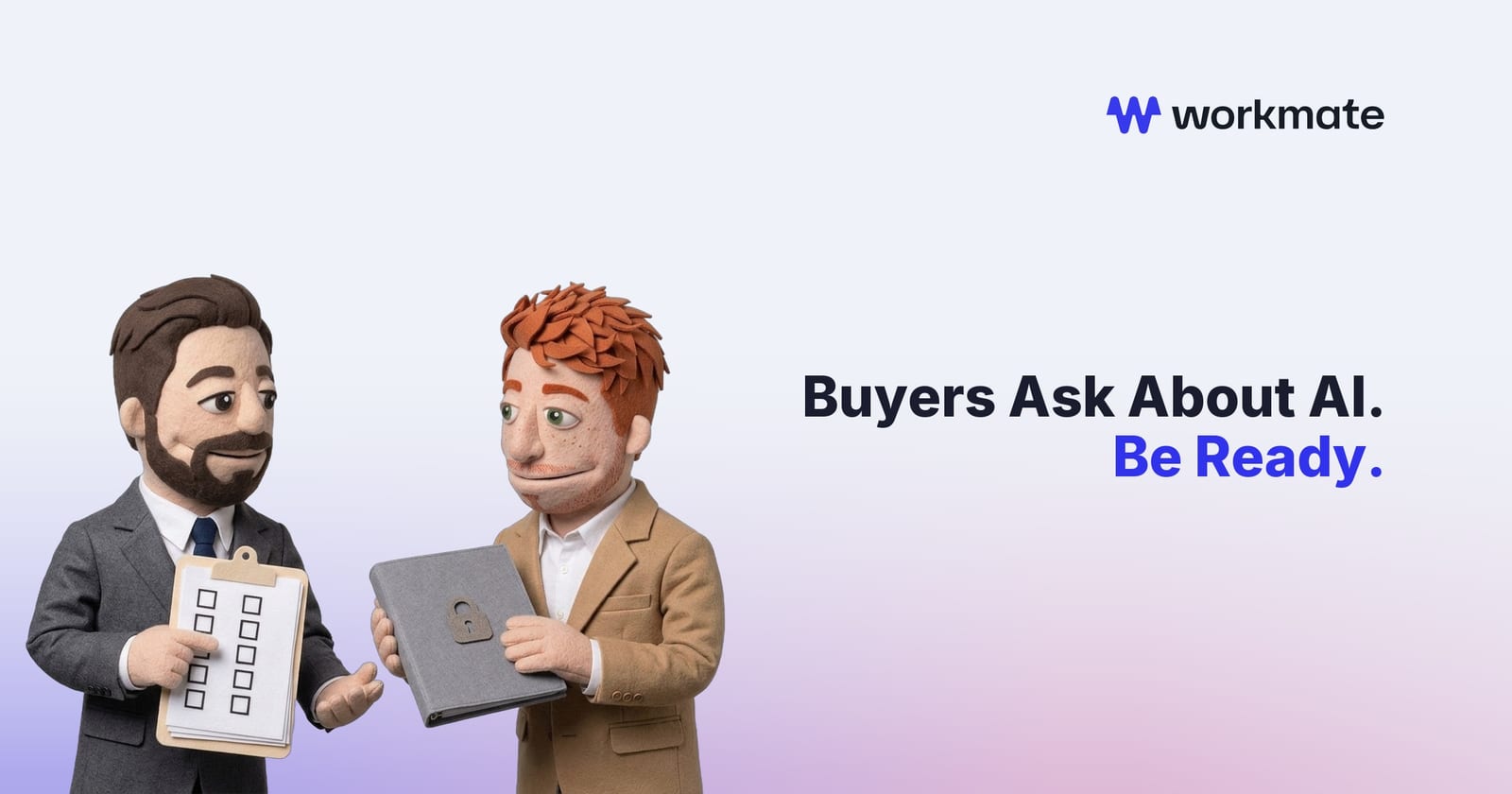
Short answer: A PE buyer will ask six things about your AI. What AI tools and agents you use, what data they touch, who can access them, whether people review high-stakes decisions, what your vendor contracts say, and whether AI is part of a credible value-creation plan. Expect the questions in both legal and operational diligence. A&M's 2026 survey found 80% of sponsors now build AI into their investment thesis, so a clear, documented answer protects your valuation.
Why AI is now a standard diligence topic
AI moved from an IT question to a valuation question in about two years.
- It's in the thesis. In Alvarez & Marsal's August 2026 survey of nearly 100 senior PE leaders, 80% of sponsors said they actively factor AI into their investment thesis as a driver of operational and commercial value. (A&M, How Due Diligence Is Adapting to Volatility, 2026)
- It affects the exit. In FTI Consulting's survey of 539 PE investment managers, 58% named AI and automation maturity as a decisive exit factor. (FTI-Andersch, July 16, 2025)
- It has its own diligence stream. Bain's Global Private Equity Report 2026 describes "full potential" diligence that explicitly explores "AI and digital risks and opportunities for the business and the industry" alongside commercial, operational and tech work. (Bain & Company, 2026)
The six AI questions PE buyers ask in due diligence
1. What AI do you use, and what does each tool do?
Law firm Hall & Wilcox advises buyers to request "a comprehensive inventory of all AI systems, models, tools and solutions developed, deployed, licensed or used by the business," including agentic AI, with each system's purpose, origin and where it operates. A red flag is "extensive or unmonitored use of public non-secure AI tools." (Hall & Wilcox, July 2025)
Have ready: a one-page AI inventory listing each tool, owner, purpose, data it touches and vendor.
2. What data does your AI touch, and do you have the right to use it?
Buyers will check that customer and employee data is used lawfully, that privacy rules are followed, and that data retention and deletion policies exist.
Have ready: your data map, privacy policy, data processing agreements with AI vendors and retention policy.
3. Who can access your AI systems, and how are they secured?
Hall & Wilcox lists security policies, assessments and certifications, plus "details of all known incidents of misuse, malfunction or unintended consequences." Deloitte's 2025 M&A survey found 67% of corporate and PE leaders name data security as a leading AI concern. (Deloitte, Oct. 9, 2025)
Have ready: vendor SOC 2 reports, your access-control model (who can connect which apps), logs and an incident register, even if it's empty.
4. Do people review high-stakes AI decisions?
RSM tells investors to check whether a target's AI policies "require human review for high-stakes decisions," and calls vagueness here a "first-wave priority after closing." (RSM US, Oct. 2025)
Have ready: a written AI use policy that says which actions need human approval, such as payments, customer emails and contract changes.
5. What do your AI vendor contracts say?
Buyers review licensing and SaaS terms for each AI tool, including standard terms for off-the-shelf tools, to understand liability, data use and whether the contracts survive a change of control.
Have ready: the contracts, and a note on any vendor that trains on your data.
6. Is AI a credible part of the value-creation plan?
Diligence now looks for upside too. RSM says investors want AI use cases with "a measurable line of sight to EBITDA in six months or less," and checks data quality, infrastructure, skills, culture and aligned use cases.
Have ready: two or three AI workflows already in production, with before-and-after numbers such as hours saved, cycle time or cost per transaction.
Sign up for our newsletter
Get the latest updates, product launches, and helpful tips delivered straight to your inbox.
AI due diligence readiness checklist
| Buyer question | What to have in the data room |
|---|---|
| What AI do you use? | AI inventory: tool, owner, purpose, data, vendor |
| What data does it touch? | Data map, privacy policy, vendor DPAs |
| Who can access it? | Access-control model, vendor SOC 2 reports, logs |
| Do people review it? | Written AI use policy with human-approval rules |
| What do contracts say? | AI vendor agreements, change-of-control terms |
| Is it creating value? | Live workflows with measured results |
How Workmate helps portfolio companies pass AI diligence
Workmate builds custom AI agents for PE-backed companies with the controls buyers ask about built in, not added later:
- Admin controls over which apps, integrations and skills each AI agent can use.
- Human approval around sensitive actions, credentials and outside communications. Credentials are kept in a vault that can require a person's sign-off.
- Separate workspaces. Each Workmate runs in its own isolated workspace with private file storage.
- A reviewable trail. Important actions and operational changes are logged, so you can show a buyer what happened and when.
- SOC 2 Type II audited and Google CASA verified.
Details are on the Workmate security page. For buyers, that means the AI inventory, access model and human-approval rules already exist when diligence starts.
FAQ: AI governance in PE due diligence
Do small portfolio companies really get asked about AI?
Increasingly, yes. Once 80% of sponsors build AI into their thesis, buyers ask every target. Smaller companies are more likely to be flagged for unmonitored use of public AI tools.
Can poor AI governance lower a company's valuation?
It can turn into a price discussion or a post-close fix-it list. RSM treats missing AI policies as a "first-wave priority" for the new owner, which means time and money the buyer factors in.
What is the fastest way to get AI diligence-ready?
Write the AI inventory and the human-approval policy first. Both take days, not months, and they answer the first questions a buyer will ask.
To see how agents differ from basic chatbots, read What Are AI Agents, Really?
Sign up for our newsletter
Get the latest updates, product launches, and helpful tips delivered straight to your inbox.
Workmate
See what an agent team would do for your business.
Keep reading
ChatGPT, Claude, Gemini or Copilot: What's the Difference?
Four names keep coming up when people talk about AI at work. Here's a simple guide to who makes each one, how businesses use them, and how to pick the right one for your job.
Who Owns the Work AI Makes for Me?
You asked an AI to write or draw something. Who owns it? A simple guide to what AI companies' terms say, what U.S. copyright law says, and what that means for everyday work.
Can AI Be Biased?
AI isn't unfair on purpose, but it learns from examples made by people and can repeat their blind spots. Here's what AI bias is, where it comes from, what it looks like at work, and simple habits that help you use AI fairly.